Strengthening Emergency Care in Moldova by building a Resilient System for Today and Tomorrow
With support from the Swiss Agency for Development and Cooperation (SDC), the Republic of Moldova is transforming its emergency care system. Implemented by the WHO Country Office, this multi-year project aims to ensure that people at risk, or those facing urgent, life-threatening conditions, receive faster, safer, and more effective emergency care, whether during daily clinical emergencies or major public health crises.
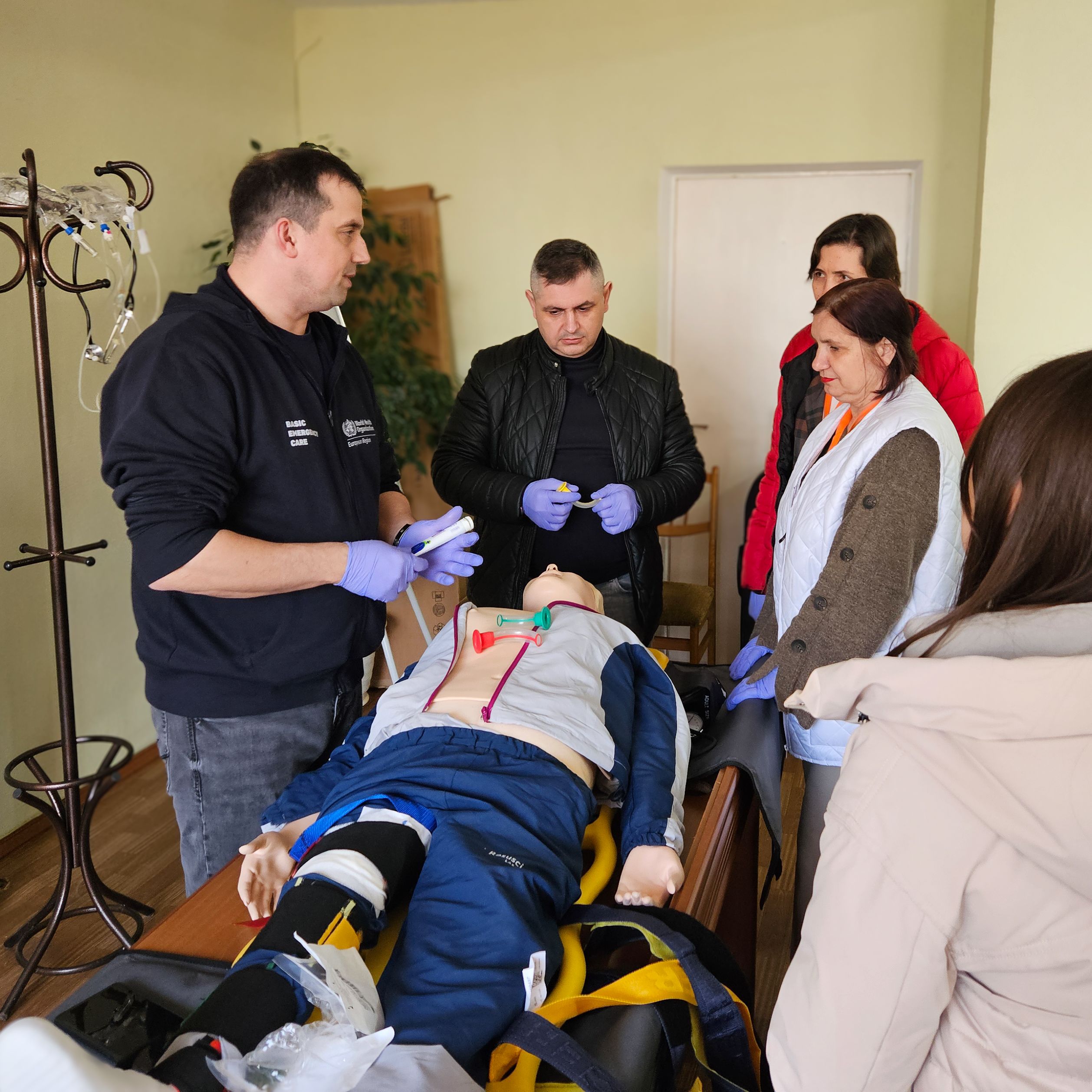
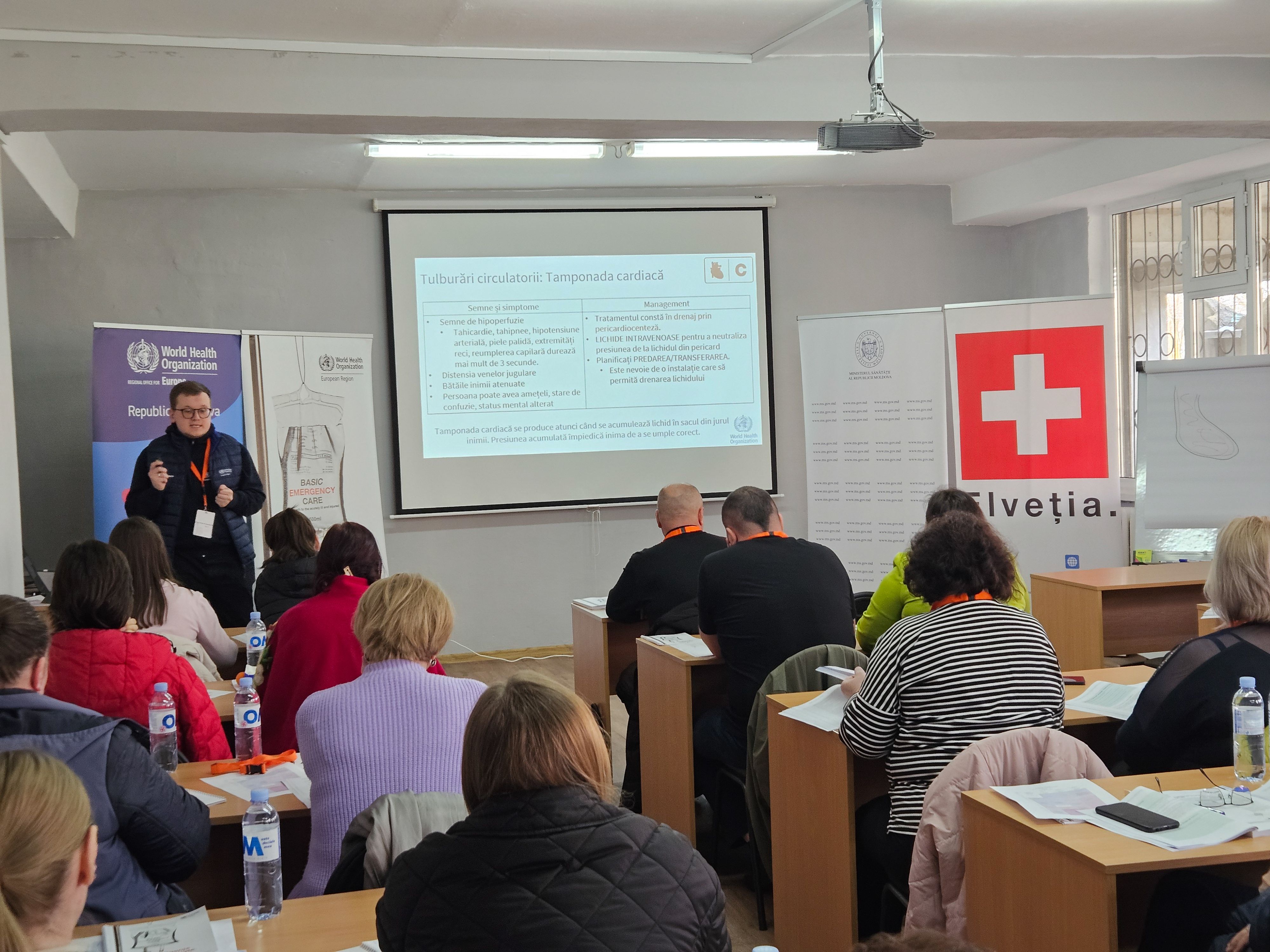
The prime goal is to increase survival chances for people facing medical emergencies. To achieve this, the project focuses on three key areas. First, it supports Moldovan health authorities in creating a strong policy and governance framework, enabling a modern, responsive emergency care system. This includes improved regulations, digital tools for resource planning, and strengthened preparedness for mass casualty incidents. Second, the project enhances the capacity of emergency care providers by providing clinical trainings, upgrading the equipment, and developing simulation centres. These efforts ensure that healthcare professionals at both prehospital and hospital levels are better equipped to deliver quality life-saving services. Third, following the chain of survival approach, the project empowers the general population and emergency responders - including firefighters and rescue personnel - by improving health literacy and first aid skills. This ensures individuals can respond effectively in emergencies before professional help arrives.
This intervention is particularly relevant now. Moldova’s health system has been under significant pressure, first from the COVID-19 pandemic and now due to the impact of ongoing war in neighbouring Ukraine, including caring for refugees and preparing for potential humanitarian crises. Strengthening emergency care improves the health system’s resilience, ensures faster and safer emergency responses, reduces avoidable deaths, and increases public trust in healthcare services.
As Dr. Marin Vozian, an associate professor at Department of Surgery Nr1 “Nicolae Anestiadi” of the State University of Medicine and Pharmacy “Nicolae Testemitanu” explains: “One of the biggest threats with acutely ill patients is being afraid to make the wrong choice and to miss the chance to save a life. The programme’s training and experience builds confidence in making timely decisions, ensuring you have done the ‘right thing’ even if the outcome was not as hoped. Additionally, it provides you with arguments about a critical case being managed a certain way.”
In addition to building its own national capacity, Moldovan national experts have been contributing to regional efforts in strengthening emergency care and mass casualty management readiness of the hospitals. Moldovan trainers have shared their experience and knowledge by conducting a series of Basic Emergency Care (BEC) courses in Ukraine, Kazakhstan and Tajikistan and by instituting national teaching faculties in these countries. Moldova’s leadership in implementing clinical tools for improved emergency care is a model for scaling emergency care training in regions with similar challenges. By investing in Moldova, Switzerland contributes to building more resilient healthcare systems across European and Central Asian region.