Shared Action for Healthy Ageing in Nepal
The Changunarayan Municipality, in collaboration with the Nepal Red Cross Society (NRCS) Bhaktapur District Chapter and the Swiss Red Cross (SRC), is implementing the SAHARA Healthy Ageing Project (2024–2026) to enhance age-friendly services under the Age-Friendly City (AFC) framework. A baseline survey in 2024 identified gaps in senior citizen satisfaction, prompting this follow-up mini-survey in mid-2025 to evaluate progress and refine methodologies ahead of a comprehensive year-end review. The survey covered 100 older adults (60+ years), randomly selected from 611 individuals, who had previously been reached by the Red Cross and Municipality volunteers with discussion or education on healthy ageing behaviours.
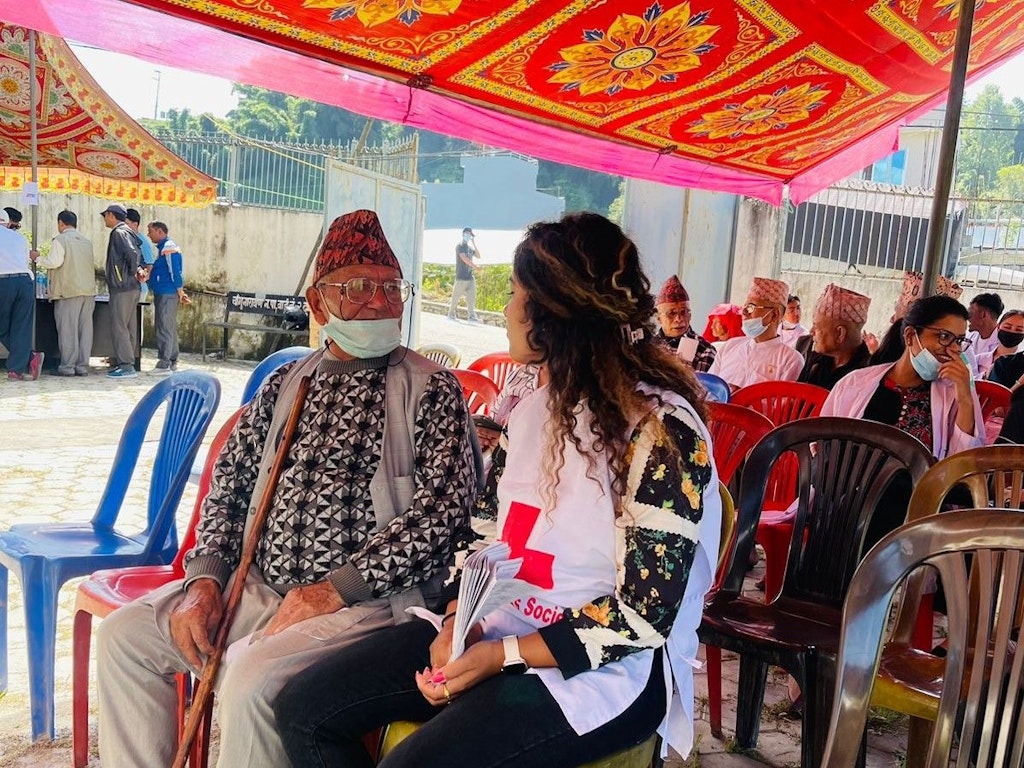
Municipal service awareness was high (93%), though 33%, predominantly women, were unfamiliar with the SAHARA program. Overall satisfaction reached 84% (21% “very satisfied,” 63% "satisfied"), a sharp increase from the baseline (June 2024) of 27.6% reflecting improved municipal–NRCS cooperation.
Social security allowances, received by 42% of eligible seniors, achieved a high satisfaction rate of 98%. However, key challenges included long wait times (52%) and travel difficulties (50%). Most recipients (62%) preferred ward-based distribution (banking service), which is currently the practice. A significant majority (69%) spent their allowances on essentials such as food and healthcare, with minimal savings. It is evident that older people are significantly satisfied (79%) with Municipality's health services, yet 20% reported no access, neutrality, or dissatisfaction. Because regular care and medicines are their main need, they raised stronger concern to prioritize the improvement of health services. Noteworthy, barriers were reported in accessing health camps and medicines, highlighting concerns related to service accessibility and the quality of available medicines. Additionally, 17% of older people lacked a Senior Citizen ID card, with half of them unaware of the processing requirements. Meanwhile, 16% had no health insurance, citing reasons such as complex enrolment procedures and a lack of trust in the system.
Feedback emphasized demands for home-based delivery of the social security allowance for the vulnerable older people, accessible health check-ups, and closer community gathering spaces. Key recommendations include streamlining the social security allowance distribution via SMS alerts and home visits, improving health service quality, simplifying ID/insurance processes, and strengthening grievance mechanisms. The mixed suggestions (positive and constructive) from the older people demand long-term strategies to prioritize age-friendly infrastructure and targeted outreach to marginalized groups, such as women and rural older people.
The findings highlight both progress and certain gaps, particularly in healthcare access and among those expressing dissatisfaction. Addressing these through data-driven, community-focused actions will further reinforce the municipality's AFC commitments. Feedback from older residents suggests practical measures, from streamlining allowance distribution to improving health camp accessibility, which can enhance quality of life. Many suggestions, such as home delivery of services for vulnerable individuals and better communication about programs, are straightforward to implement, while others, like simplifying ID card applications and expanding insurance awareness, require broader systemic changes.
Moving forward, prioritizing urgent needs alongside gradual, supportive measures will help ensure sustainable progress. By listening to older residents and working collaboratively, the municipality can create more inclusive, efficient services that honour their contributions and meet their needs.
Authors:
- Dinesh Thapa, SAHARA project focal Changunarayan Municipality
- Uma Thapa, SAHARA project focal NRCS Bhaktapur District Chapter
- Kamal Baral, Swiss Red Cross Country Representative
To receive the full report, please contact Kamal Baral