
Published on 30 September 2025

Sexual and Reproductive Health and Rights
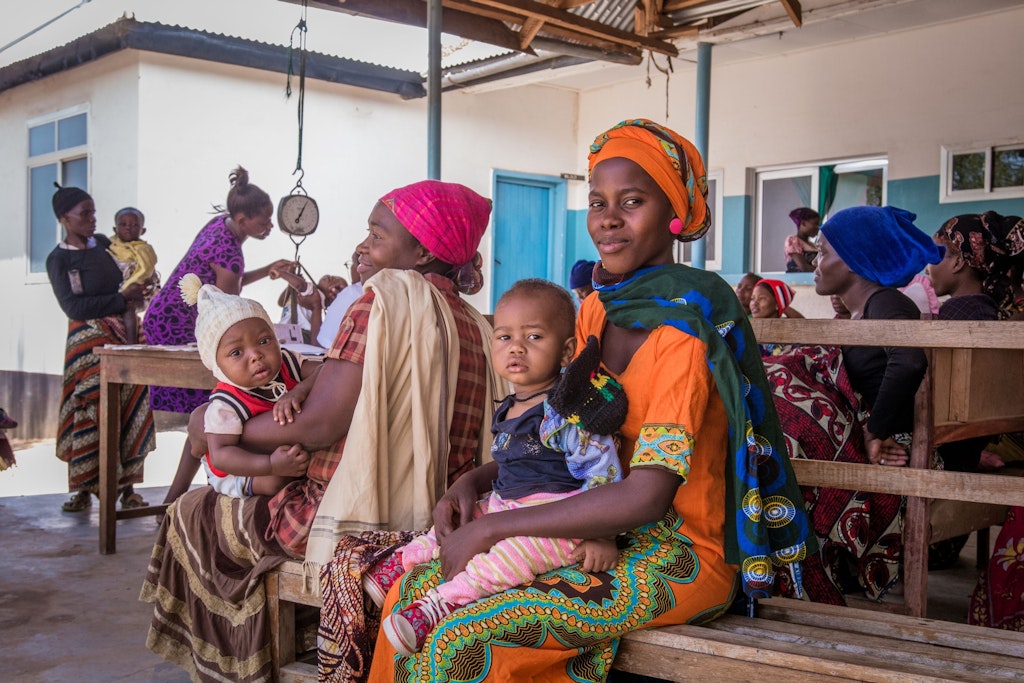
Sexual and reproductive health rights are a key factor for a person's social, economic and health-related development. Although child and maternal mortality has decreased significantly worldwide, around 830 women continue to die every day because of factors related to mother and child health health. Many challenges remain in this area, particularly in low-income countries. Further action is needed towards comprehensive and age-appropriate sex education in and outside of school, access to contraception, diagnosis and treatment of sexually transmitted diseases (STDs), preventing improperly performed abortions and reducing sexual and gender-based violence.

Switzerland promotes sexual and reproductive health and rights for all, which includes empowering women, mothers, infants and young people. SDC supports various projects in SRHR for young people aged between 10 and 24 years in southern Africa, that focus on the promotion of safer schools and youth-friendly health services and social protection. Switzerland also supports international partners such as the International Planned Parenthood Federation (IPPF) and the sexual and reproductive health research programmes of several UN agencies and the World Bank.

Upcoming Events

Congresses and symposia27 April 2026

The Women Deliver 2026 Conference

Women Deliver is thrilled to announce that the Women Deliver 2026 Conference (WD2026) will be hosted by the Oceanic Pacific region from April 27-30, 2026, in Melbourne, Australia. This marks a historic first for Women Deliver-a regionally-hosted conference that shifts power to feminists from the Oceanic Pacific Region, creating a transformative space to shape a progressive Post-2030 Agenda. Since our inaugural conference in 2007, Women Deliver has hosted some of the world’s most influential gatherings for gender equality. To date, over 30,000 advocates, experts, and decision-makers have united through Women Deliver Conferences, fostering life-changing advancements in gender equality and sexual and reproductive health and rights (SRHR)

  • 27 - 30 April 2026

Statistics and data1 January 2023

Snapshot of gender equality across the Sustainable Development Goals

Between 2000 and 2020, maternal mortality declined by one third globally, from 339 to 223 deaths per 100,000 live births, but progress has stalled since 2015. Find gender aggregated health data on page 10.

PDF1.71 MB

Guides and manuals1 January 2022

Inequality Monitoring In Sexual, Reproductive, Maternal, Newborn, Child And Adolescent Health: A step-by-step manual

The manual is a practical introductory guide to strengthen and build capacity for quantitative inequality monitoring in SRMNCAH. It guides users through the processes of setting the scope for inequality monitoring, deciding on the best available data for monitoring, performing data analysis, and reporting findings.

PDF2.89 MB

Guides and manuals1 January 2022

Global health sector strategies on, respectively, HIV, viral hepatitis and sexually transmitted infections for the period 2022-2030

The 2022–2030 global health sector strategies on, respectively, HIV, viral hepatitis and sexually transmitted infections guide the health sector in implementing strategically focused responses to achieve the goals of ending AIDS, viral hepatitis B and C and sexually transmitted infections by 2030

PDF4.09 MB

Reports and studies28 September 2021

Implementation Research Report: Community Perceptions of Facilitators and Barriers to Maternal and Child Health Service Use in Dang and Rukum District of Nepal

This research is designed to improve the understanding of social determinants of institutional delivery also referred as facility-based delivery with the aim to explore the community perceptions of facilitators and barriers on maternal and child health service utilization and generate the knowledge on socio-cultural and behavioral barriers and enablers for facility-based delivery.

PDF2.09 MB

Guides and manuals1 January 2021

Multipurpose prevention technologies Technology Landscape and Potential for Low- And Middle-Income Countries

The objective of this report is to provide an overview of the current landscape of MPTs, products that simultaneously prevent HIV, other STIs, and/or unintended pregnancy, and assess their relevance and potential challenges for L/MICs. The report aims to support the timely introduction of these innovations and identify challenges, including in research and development (R&D) or related to market entry, which may hamper the adoption and impact of MPTs in L/MICs if not promptly addressed.

PDF1.73 MB

Reports and studies1 January 2021

Global progress report on HIV, viral hepatitis and sexually transmitted infections 2021

The 2021 global progress report on HIV, viral hepatitis and sexually transmitted infections, is an opportunity to take stock of the progress achieved in addressing these diseases to date, the setbacks caused by the pandemic, and the lessons learned for the coming decade

PDF4.98 MB

Reports and studies1 January 2019

Sexual and reproductive health and rights and HIV

Early and forced marriage, forced sterilization, criminalization of mother-to-child HIV transmission and forced abortion—as well as inequality, repressive gender roles and intimate partner violence—have been identified as deep-rooted factors that limit the control that women and girls have over their own sexuality, health and rights.

PDF190.83 kB

Reports and studies1 January 2019

Elimination without violation: Supporting women living with HIV in putting human rights at the centre of validating the elimination of mother-to-child transmission of HIV

Cuba, with its highly developed health-care infrastructure and universal health coverage, had reduced the rate of HIV transmission from mother to child to about 2% and eliminated congenital syphilis by 2012, following a concerted effort with the Pan American Health Organization (PAHO) (6). Cuba requested validation of status of elimination in late 2013, before the WHO guidelines had been finalized, becoming a pioneer for the process as a result.

PDF157.95 kB

Reports and studies1 January 2019

Demanding access to justice: Spearheading the establishment of the Coalition of Lawyers for Human Rights in Nigeria

Discrimination and violence against lesbian, gay, bisexual, transgender and intersex (LGBTI) people in Nigeria are far too common. Human rights violations against LGBTI people are fuelled by coercive and discriminatory legislation: same-sex sexual relations are criminalized in the country, and in some states in northern Nigeria where Shari’a law is applied, these acts are punishable by death

PDF123.30 kB