
Scaling Up NCD Solutions in Moldova
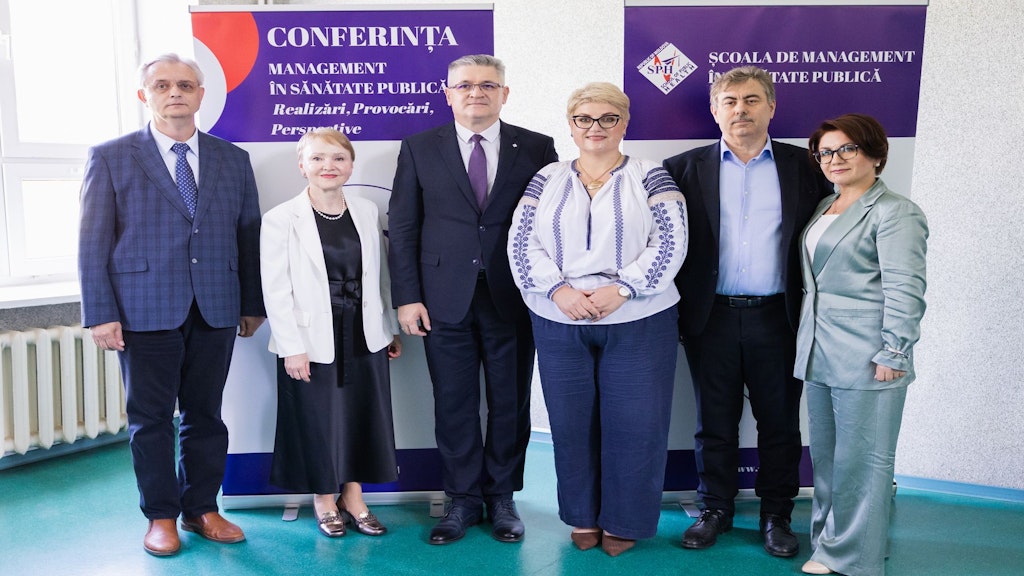
On 20-21 June 2025, the Moldovan-Swiss project “Healthy Life: Reducing the Burden of Noncommunicable Diseases” took part in an international scientific conference “Public Health Management: Achievements, Challenges, Perspectives”, organized on the occasion of the 80th anniversary of the founding of the Nicolae Testemițanu State University of Medicine and Pharmacy (USMF) and the 20th anniversary of the School of Public Health Management in the Republic of Moldova.

Health promotion – an intersectoral responsibility
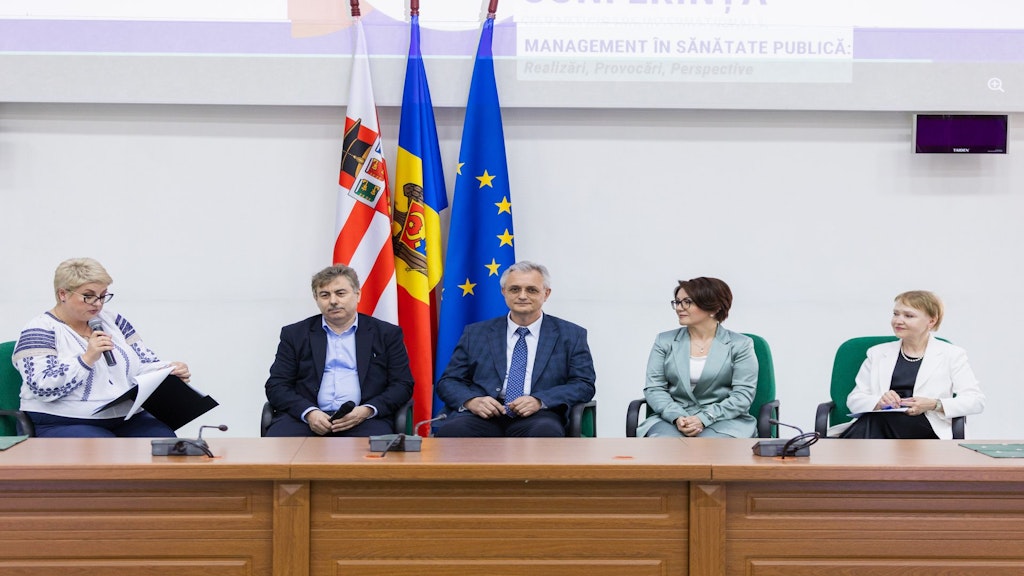
During the plenary session, in the panel dedicated to opportunities for health promotion, Ala Curteanu, team leader, presented the contribution of the Healthy Life Project to reducing the burden of noncommunicable diseases (NCDs) through prevention and community engagement, with a strong emphasis on health determinants and intersectoral approaches applied across the life course. She stressed that the sustainability of public health interventions is ensured in communities where collaboration between different sectors like health, social assistance, education, environment, food industry, law enforcement and civil society, is coordinated by Local Public Authorities.
Community mobilization in 75 rural localities
Diana Berari, community coordinator of the project, presented the community mobilization model designed to empower people to maintain their health. This model was piloted in 75 rural communities and included the formation of local health coalitions, participatory methods for identifying community resources, health literacy activities, and prevention interventions – from information campaigns and behaviour change initiatives promoting healthy lifestyles to the Chronic Disease Self-Management Program (#ABCProgram).
Two impactful studies
The first study, “Consolidating Public Health Priorities through Multisectoral Approaches: Perspectives from the Healthy Life Project (2017–2024)”, presented by Jari Kempers (Health Financing Expert), highlighted a general decrease in average blood pressure levels (−2 mmHg systolic and −3 mmHg diastolic), with the largest reductions observed in the northern region (−8 / −7 mmHg). Sugar consumption decreased from 61% to 49%, while knowledge about NCDs more than doubled, with the greatest improvements among women and older adults in southern Moldova. In addition, awareness of patient rights increased from 78% (2020) to 89% (2024), especially among people aged 45–69 in the northern region.
The second study, “A Real-World Assessment of Adherence to PEN Protocols in Primary Health Care Institutions in the Republic of Moldova”, presented by Alexandra Țopa (Family Medicine Expert), showed that the trainings delivered by the project significantly improved adherence to PEN protocols. This resulted in longer consultations, better diagnostic practices, and more active involvement of nurses in prevention and NCD management.
The recommendations of the two studies underline the importance of strengthening multisectoral platforms and fostering inter- and intradisciplinary collaboration for sustainable public health interventions, extending PEN trainings, conducting regular refresher sessions for family medicine teams – especially nurses – and systematically applying the SCORE and FINDRISC tools to ensure early detection and effective NCD management.
Commitment to sustainable solutions
The participation of Healthy Life in this international conference reconfirms the project’s commitment to promoting effective, evidence-based, and sustainable public health solutions. The models and approaches developed during 2017–2024 already show visible results and can be scaled up nationwide to reduce the burden of NCDs in the Republic of Moldova.