
Treating Somalia’s Fragmented Health System
Through networking events, SDC-funded PSPH Program in Somalia and Somaliland is mobilizing previously segmented private healthcare providers to form influential networks and laying the groundwork for a more resilient and equitable health system. Somalia-based facilities are uniting under CAAFINET, while those in Somaliland have a new key network, Somaliland Private Healthcare Network (SOLPHNet) to champion health industry-related issues.
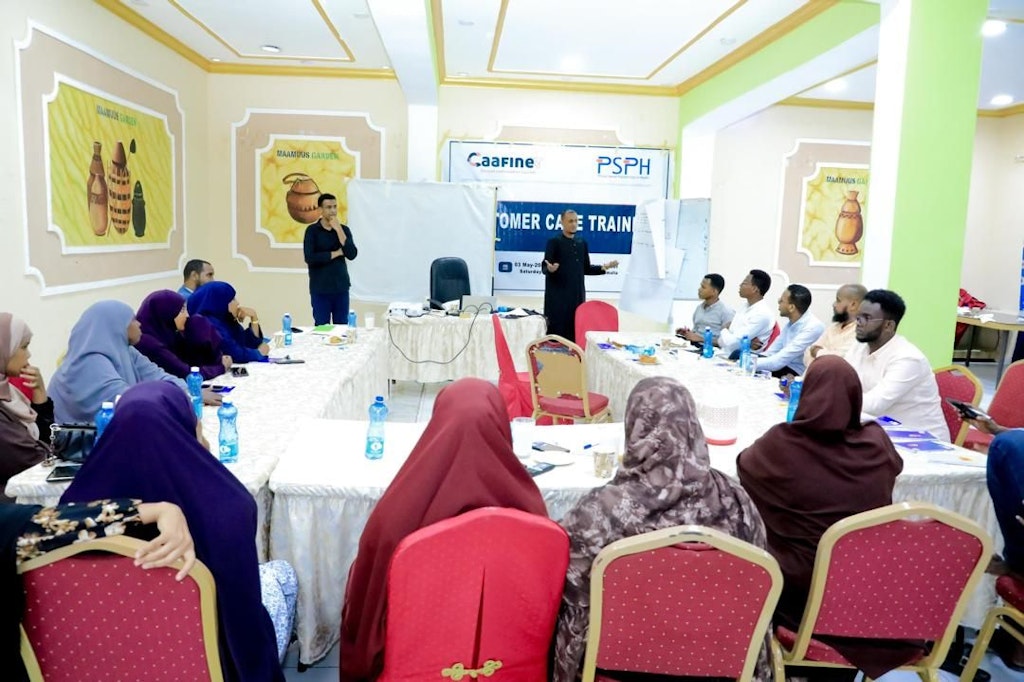
In Somalia and Somaliland, where the private sector delivers over 80% of healthcare, long-standing fragmentation has hindered improvements in quality, affordability, and access for years. Prior to 2021, hospitals, clinics, and diagnostic centres operated in isolation, sparking intense competition rather than collaboration. This disunity led to inconsistent standards of care and left providers without the collective strength to negotiate for better pharmaceutical prices or advocate for meaningful policy reforms.
Today, however, this landscape is being reshaped by the SDC-funded Private Sector Partnerships in Health (PSPH) project. Through PSPH, private healthcare providers are forming influential networks and laying the groundwork for a more resilient and equitable health system. This approach, deeply rooted in the principles of Market Systems Development (MSD), aims for systemic change and sustainability beyond the project’s lifespan.
Despite the commitment of individual facilities to patient care, the PSPH project (2021-2025 and now running through 2029) launched into a market characterised by minimal industry-level cooperation. A formal framework for sharing knowledge and standards, coordinating patient referrals, or leveraging collective bargaining power was absent. Compounding this challenge, the CAAFINET Enterprise, founded in 2017 to foster collaboration in Mogadishu, had not achieved its full strategic potential.
To catalyse change, PSPH implemented an approach that empowers local actors to drive their own solutions rather than rely on direct aid. The core strategy has been to facilitate capacity building, crucial networking and outreach opportunities, and provide technical support in co-developing strategic action plans for collaboration. By bringing providers together, this approach illuminated shared challenges and highlighted the clear benefits of cooperation, reviving a push for formal organization. This foundational work culminated in the strengthening of two key networks: the CAAFINET Enterprise in Somalia and the new Somaliland Private Healthcare Network (SOLPHNet).
Power of Networking
In Somalia, PSPH’s partnership has helped CAAFINET Enterprise expand its reach and impact. The network now includes over 124 diverse healthcare providers, including clinics, diagnostic centres, pharmacies, and multi-specialty hospitals across key areas like Mogadishu, Baidoa, Galmudug, Galkayo, and Kismayo, thereby creating a better integrated value chain.
In Somaliland, the establishment of SOLPHNet represents a new chapter for the region’s private healthcare. The network has successfully onboarded 50 member facilities, connecting providers in urban centres such as Hargeisa, Borama, and Burao with those in more remote communities.
Both CAAFINET Enterprise and SOLPHNet share a clear mission: to empower private healthcare providers through common standards, joint initiatives, and unified advocacy. Their objective is to improve healthcare delivery and expand access to quality services for all Somalis, including those in marginalised communities, not as individual hospitals, but as a wider industry. The practical application of this mission is creating systemic change through several core functions:
Diversified market drive impact
The impact of this new collaborative model extends beyond the internal operations of healthcare facilities and is beginning to reshape the broader market. Other players in the economy, especially insurance providers, are taking notice. For example, insurance companies, which previously found the fragmented healthcare market difficult to penetrate, are now able to partner with these organized networks to design and offer new products. PSPH has worked with Baraka Takaful Insurance to launch Somalia’s pioneering affordable mass market health insurance package, Kaaliye Care.
This new approach is delivering tangible results for the Somali people, notably, by making private healthcare accessible and affordable to all for the first time. Innovative and affordable health packages are challenging the long-held notion that private facilities are exclusively for the affluent. For example, the Bajaj Kaabe Initiative is providing comprehensive health membership plans for Mogadishu’s bajaj (3-wheeled motor taxi) drivers and their families for just $5 a year. With over 2,600 drivers already enrolled, the model is not only improving health outcomes but also inspiring new ways to finance healthcare. Another groundbreaking program for women, the Hoyo Kaabe Health Package, supports expectant mothers in Mogadishu. A one-off $20 fee covers significant discounts on essential services—from antenatal care to emergency support—at Al Caasima Hospital, ensuring a safer and more financially secure journey to motherhood and beyond.
The progress in Somalia and Somaliland demonstrates the effectiveness of a well implemented MSD approach in a complex, fragile environment. PSPH offers high leverage for SDC’s investment as the project offers only technical assistance to partners and neither provides grants nor any form of direct financing. By facilitating connections and empowering local institutions, based on a deep locally driven understanding of the Somali health sector and business culture, the PSPH project has helped lay a foundation for a more organized, efficient, and inclusive private healthcare system. The development of CAAFINET and SOLPHNet is more than just an organizational success; it is a systemic change that is creating a more sustainable healthcare market for the future.