
Peer-led Health Transformation: Zimbabwe’s Adolescents Take Charge
In rural Zimbabwe, adolescents face significant barriers to accessing the health services they need. SolidarMed’s adolescent health project focuses on empowering adolescents by involving them directly in addressing key health issues like sexual and reproductive health, mental health, and substance use. By creating platforms for adolescents to guide the services they receive, the project is nurturing a generation that is more resilient, knowledgeable, and confident in making informed health decisions. Read on to discover some of the interventions making a difference.
Challenges facing adolescents
Adolescence is a critical period of transformation, where young people navigate the challenging transition from childhood to adulthood. This phase comes with significant physical, sexual, cognitive, social, and emotional changes, and access to the right healthcare services is crucial. However, in many low- and middle-income countries, especially in rural areas, adolescents often struggle to find the support they need. In Zimbabwe, with a population of 15.1 million, 61% of people live in rural areas, and almost a quarter are adolescents aged 10 to 19. Despite their numbers, these young people face daunting barriers in accessing quality health services, particularly those related to sexual and reproductive health and rights (SRHR).
In many parts of Zimbabwe, cultural taboos stifle crucial conversations about sexual health and outdated policies and socio-economic challenges make it hard for adolescents, particularly girls, to get the care they need. Unsurprisingly, early sexual activity, unwanted teenage pregnancies, and sexually transmitted infections (STIs) are all too common. The 2015 Zimbabwe Demographic Health Survey revealed that 22% of female adolescents aged 15-19 are already mothers. In addition, a 2021 study by Ndowa & Mullick found that 16.5% of young people aged 15-24 in Zimbabwe have STIs, most without symptoms, highlighting an urgent need for better awareness and proactive testing to prevent silent spread. Mental health issues and substance use are also on the rise, with many young people turning to alcohol and other drugs to cope with their harsh realities.
Recognising these challenges, SolidarMed launched an adolescent health project in January 2023. The project aims to transform adolescent health for over 29,000 adolescents aged 10-19 in three rural districts of Masvingo Province, Zimbabwe.
Baseline assessment: Hearing from adolescents
SolidarMed believes that for an adolescent project to truly succeed, it must start with the voices of adolescents themselves. To understand their needs and challenges, we conducted a comprehensive, mixed-methods baseline assessment between January and April 2023, with adolescents at the heart of the process.
The project team engaged 272 adolescents, 231 health facility workers and 77 community members through focus group discussions and individual interviews. This allowed adolescents to share their experiences, highlight gaps, and voice their needs and aspirations. The assessment also included an in-depth literature review, policy document analysis, and evaluations of ten health facilities against the World Health Organisations (WHO) eight global standards for adolescent care: health literacy, community support, appropriate services, providers competencies, facility characteristics, equity and non-discrimination, data quality and adolescent’s participation.
The findings uncovered significant gaps in the quality of care for adolescents, with none of the participating facilities fully meeting the WHO standards for adolescent-friendly services. A major issue identified was the lack of adolescent participation in health service planning. Teens felt their voices were unheard and their needs inadequately represented, contributing to a sense of exclusion and frustration. One adolescent shared, «…we want intermediaries who will advocate for us.»
Facilities also lacked a welcoming environment for young people, with significant issues related to privacy, the absence of adolescent-friendly spaces and no separate databases to track specific indicators for this age group. One teen expressed, «we want a friendly place and separate room, mixing with adults is difficult». While healthcare workers generally had the technical skills to offer a wide range of services, many adolescents reported negative experiences with staff, citing poor attitudes and insensitivity. A 15–19-year-old mentioned, «If an adolescent comes in her first trimester or with an STI, the health workers scold or even laugh at us». Interviews with healthcare staff revealed they often felt uncomfortable dealing with adolescent patients and were open to receiving support in this area.
After the assessment, the project team held adolescent health sensitisation meetings at each of the ten participating health facilities to discuss the results. This was attended by 105 health facility workers who afterwards selected a dedicated adolescent health focal nurse to coordinate adolescent health activities and ensure adolescents had a voice.
Empowering Health Care Workers to support adolescents
The baseline survey highlighted the need for more respectful, and trust-building health services for adolescents. So, the project team lead both centralised training and regular onsite mentoring sessions to enhance technical skills while fostering positive attitudes towards adolescent patients. These trainings also targeted support staff such as guards, cleaners, receptionists, who also interact with adolescent patients thus influencing their experience.
In November 2023, 18 nurses, including the 10 focal nurses, attended Adolescent Sexual and Reproductive Health training facilitated by the Zimbabwe National Family Planning Council (ZNFPC) and SolidarMed. It improved knowledge and skills to promote safer sex practices and create a safe environment for adolescents to discuss sensitive issues. One nurse composed a poem to express the group’s enthusiasm and commitment, showcasing the deep impact of the sessions.
In October 2023 and February 2024, fifteen nurses, including the ten focal nurses, attended the Mental Health Gap Action Programme (mhGAP) in collaboration with WHO and the Ministry of Health and Child Care (MoHCC). They were equipped with skills to identify and treat mental health issues, providing critical support for cognitive, neurological, and substance use disorders.
Ensuring adolescents have a voice
At the heart of our project are the adolescents dedicated to driving change in their communities. Each of the 10 participating health facilities formed a committee of 5 to 6 adolescents, chosen through a series of engaging community meetings where adolescents nominated peers to represent their voices. These committees meet monthly to discuss issues and ideas related to service delivery at their facilities and within their communities. Their ideas and concerns are then reported at hospital management meetings either by an adolescent representative or the adolescent health focal nurse supporting them.
In addition to the adolescent committee members, peer educators are the bridges connecting adolescents and healthcare services. SolidarMed collaborated with communities to select 30 peer educators—a diverse group including adolescents in and out of school, adolescent mothers, and adolescents living with HIV. To date, these peer educators have been trained on SRHR, developing communication skills and mental health counselling (problem-solving therapy). Armed with this knowledge, they organise community meetings in schools, health facilities, and churches, discussing a wide range of health topics and offering support to their peers. Working closely with the MoHCC, we are mapping out how to effectively incorporate peer educators into the formal health system, ensuring they receive ongoing training, mentoring and support.
By giving adolescents a voice and empowering peer educators, SolidarMed is fostering a community where young people feel heard, supported, and equipped to advocate for their health needs. This initiative is not just improving health services but also building a stronger, more connected community.
Creating safe spaces for adolescents
One of the most exciting ideas to emerge from the adolescents was the concept of Teen Health Information and Innovation Spaces (THIIS). These dynamic spaces were envisioned by the teens to be places not just for adolescent-friendly health care and information on SRHR, menstrual health, mental health, and substance use but also as spaces for workshops to learn new skills and have fun through participating in sports, dance and music.
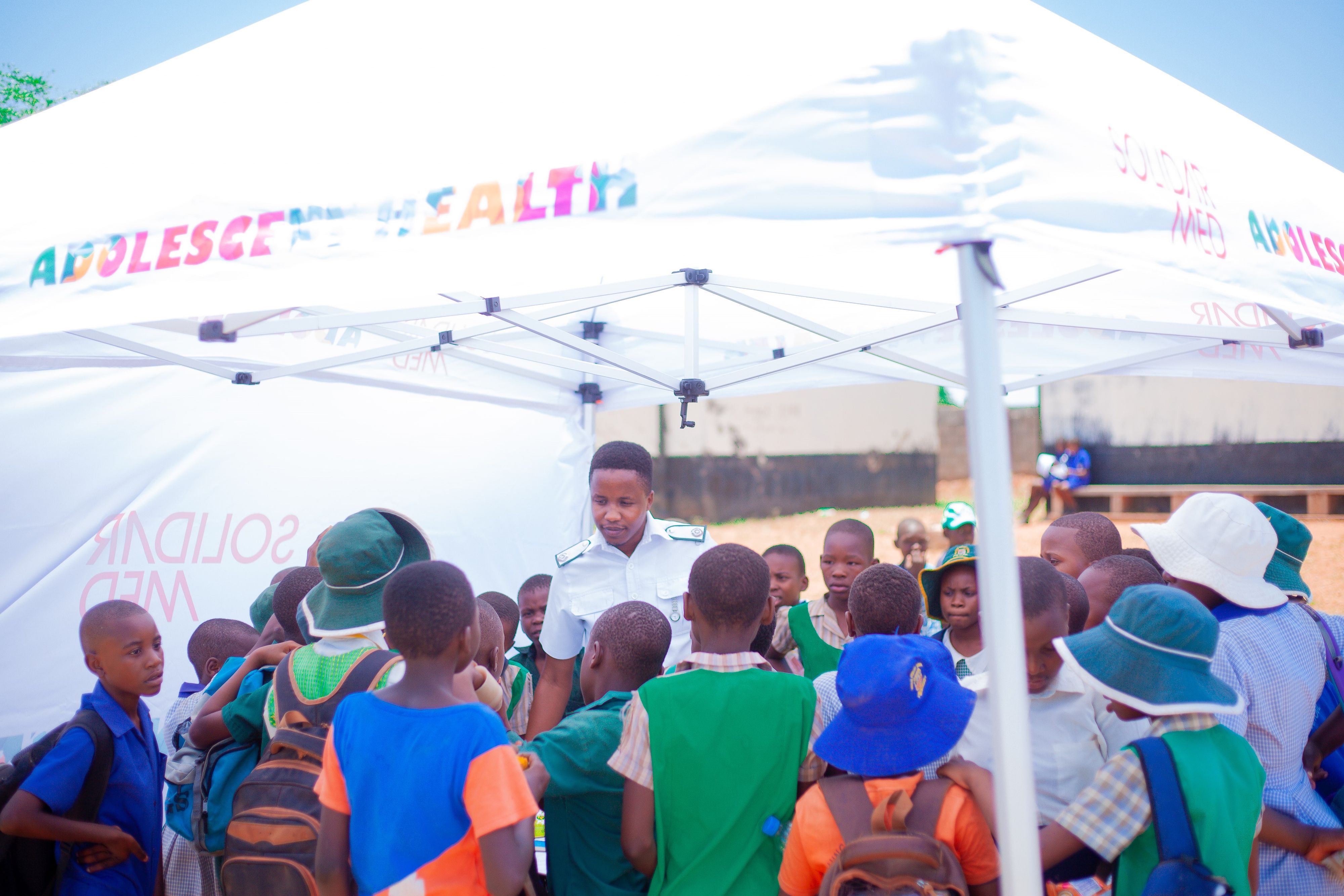
In the community, THIIS took the form of vibrant campaigns led by adolescent peers with over 2,200 adolescents in attendance. The first event, held in Chiredzi district on November 24 2023, drew extensive community support from local authorities who provided a stadium, the Ministry of Education who facilitated early school closures so that pupils could attend and 28 healthcare workers from nearby hospitals who offered services. A local musician's performance added to the excitement and the local radio station broadcasted educational messages. Side activities aimed to educate and engage adolescents in topics as broad as climate change’s impact on health, reinforcing our holistic approach to adolescent well-being. THIIS community events will be repeated across different communities, combining with school sports days and competitions where possible to reduce costs and encourage sustainability.
Building on this momentum, SolidarMed plans to establish ten fixed THIIS sites at health facilities. The first at Bota Rural Health Clinic is already open and fundraising is ongoing for the others. These sites will provide medical counselling and treatment by specially trained healthcare professionals and host health information events and self-help groups in a youth-club like space. During the renovation at Bota, adolescents participated in an art workshop, learning valuable skills before contributing to painting the new building, creating a vibrant and welcoming environment for all who visit. In the facilities that do not yet have a fixed separate space, special groups such as pregnant teens, young mothers, and adolescents living with HIV (ALHIV) are given dedicated ‹adolescent-only› times for antenatal care, postnatal care, and HIV drug pickups.
Innovation in skills development and income generating schemes
Innovation is at the heart of our THIIS initiative and capitalises on the creativity of our adolescents. At Bota Rural health facility, a local teacher volunteered to teach adolescents how to sew reusable sanitary pads. This practical skill not only promotes menstrual health but also enables teens to sell them to generate income and foster self-sufficiency. In addition, inspired the ZNPFC soap making activities by adolescents in Chiredzi, we decided to integrate this activity too. Adolescents trained in soap-making can teach their peers, creating a cycle of skill development and income generation. The plan is to pair this activity with the reusable sanitary pad sewing, allowing both products to be sold together.
Another innovative idea came from a self-help group for adolescent mothers, who suggested baking bread rolls to sell. With a traditional stone oven now built at Bota Clinic adolescent THIIS space, the first group of adolescents were trained in baking buns in May 2024 and some funds raised will be used to maintain the adolescent space. By empowering them with practical skills and opportunities for income generation, the project team are helping to build a brighter, more self-sufficient future for this generation.
Embracing the digital generation
As we look to the future, the project will launch a digital information hub. Recognising that Zimbabwean adolescents are very much part of the digital generation, this hub will be a vital tool in our mission to engage, empower and support them. This hub will be accessible at both fixed and community THIIS spaces and available for download on smartphones. It will provide accurate, age-appropriate information on a wide range of topics relevant to adolescents in a fun and engaging way. Whether it’s sexual and reproductive health, mental health, or practical life skills, teens will have reliable resources at their fingertips.
But the hub will be more than just an information source. It will be a platform for feedback, enabling adolescents to share their experiences and opinions on the services they receive. This feedback will be part of a continuous loop, ensuring that their insights directly influence and improve our programme.
Conclusion
SolidarMed's holistic approach to adolescent health emphasises the importance of creating safe, engaging, and adolescent-friendly environments. With our training and mentoring efforts, we are building a healthcare workforce that is not only technically skilled but also compassionate and dedicated to meeting the unique needs of adolescents. By empowering young people to steer the services they receive, SolidarMed is nurturing a generation that is more resilient, knowledgeable, and confident in making informed health decisions. This initiative not only addresses immediate health needs but also paves the way for a proactive, informed, and healthy future generation.