Empowering Rural Communities in Preparing Health Project Proposals and Grant Applications
Rural communities in Moldova are taking charge of their health future! Through the Moldovan-Swiss project Healthy Life, local NGOs and community coalitions have gained essential skills in writing health project proposals and securing funding. With hands-on training and mentorship, 58 out of 70 villages successfully obtained further financial support, turning their ideas into reality. From creating outdoor activity spaces to organizing health education events, these initiatives are transforming lives. Community leaders and residents now have the confidence to sustain and expand their efforts, ensuring long-term health improvements. Discover how capacity building is empowering rural Moldova to combat non-communicable diseases and promote a healthier lifestyle for generations to come!
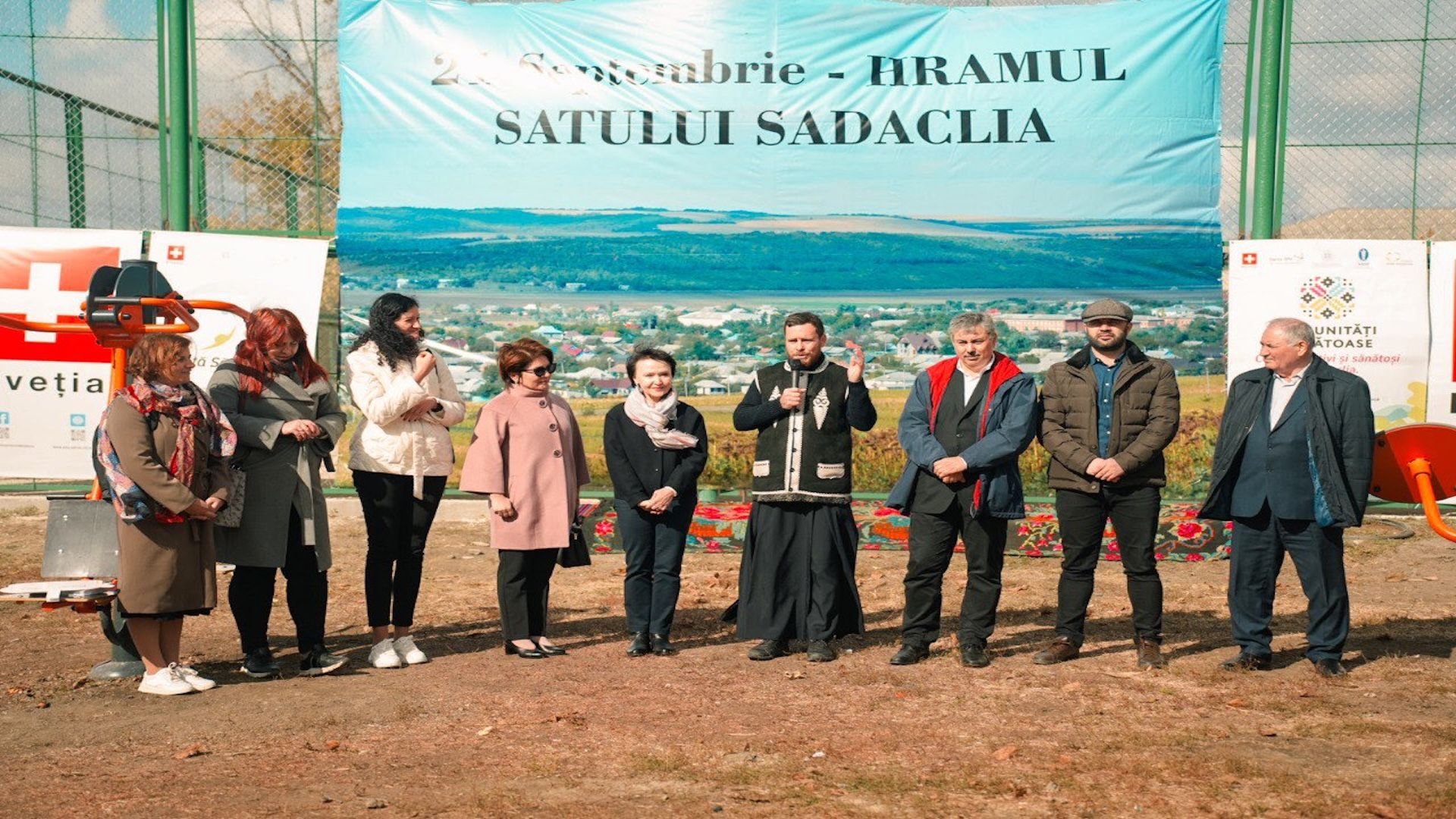
Empowering rural communities through capacity building – experience in preparing health project proposals and grant applications
The importance of capacity building for long-term self-sufficiency
The Moldovan-Swiss project "Healthy Life: Reducing the Burden of Non-Communicable Diseases” has worked extensively with rural communities 2019-2024 to build the capacities of community coalitions and non-governmental organizations (NGOs) to develop proposals and apply for grants and other financial support.
Meanwhile, 58 out of the 70 villages involved with the project, and having gained practice through a small grants scheme, have successfully obtained further health funding from the Government of the Republic of Moldova under the “European Village” Program.
Strengthening of community coalitions and rural NGOs
Empowering community coalitions and NGOs through a consolidated package of training in health project writing and implementation has addressed the need for civil society development in rural areas, where local NGOs are often ignored and lack access to knowledge and skills.
After facilitating the formation of community coalitions with representatives from local public administration, the education, health and social sectors, cultural institutions, churches, police, businesses, and opinion leaders, the initial exercise involved a process of “asset mapping” - a method of identifying local resources that can be revitalized, in this case, to promote health and reduce NCDs. Once identified, coalition and NGO members proceeded to the health project writing stage, transforming ideas into viable, implementable projects. Co-creating a solid proposal and realistic budget, also showing LPA co-investment held the key to the process.
Subsequently, each team applying and receiving a local health project was guided through the implementation stages, taking part in guided consultations on application, implementation and resource management, monitoring and evaluation.
Tangible Results for Healthy Communities
Between 2019 and 2024, 70 localities in 35 districts achieved remarkable results to:
- Develop 60 recreational and outdoor physical activity spaces;
- Create 28 halls for physical activity and relaxation;
- Organize 807 community mobilization events for health;
- Conduct 546 health education seminars, attended by 19,700 villagers
Community Testimonials
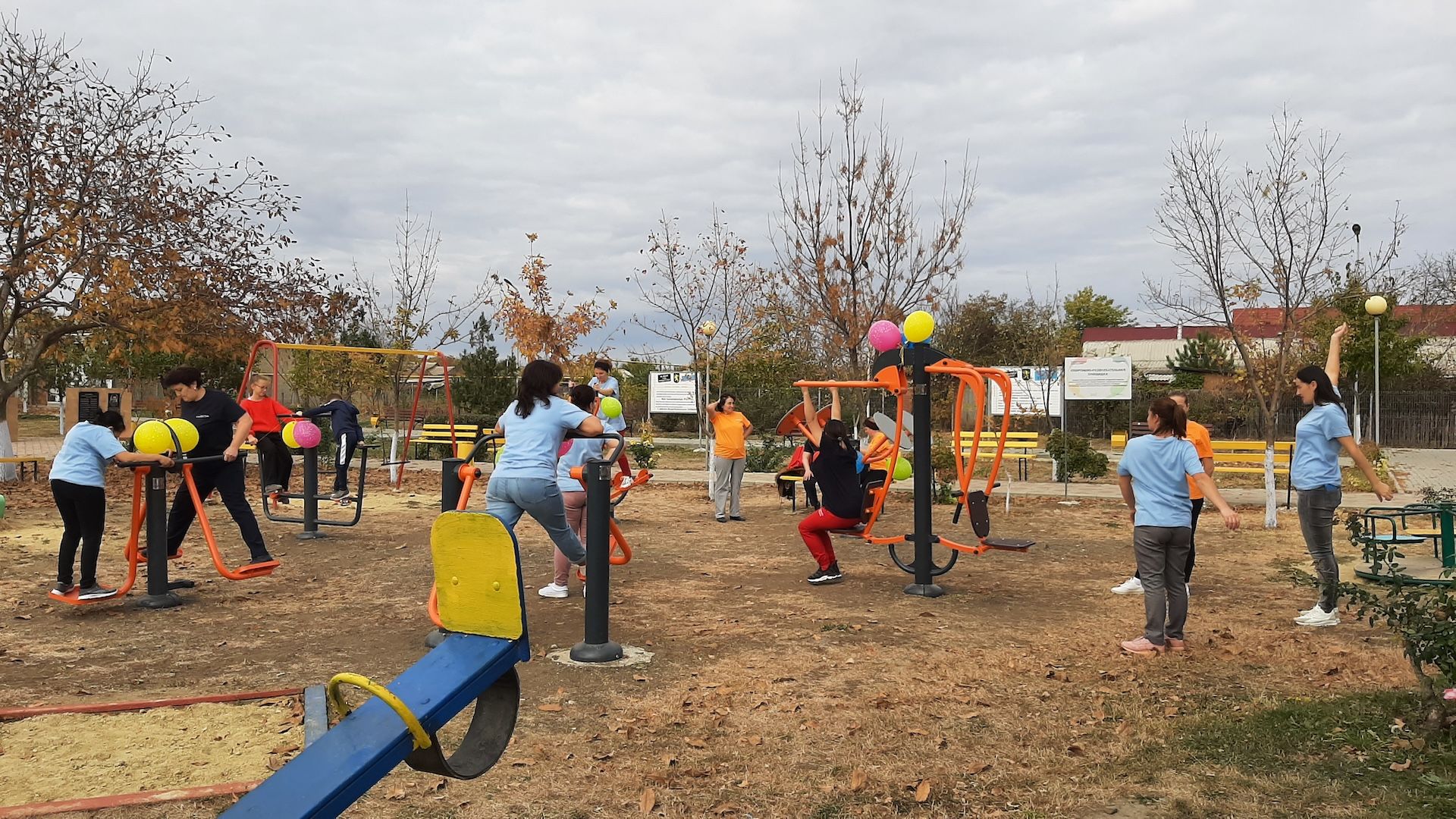
Tatiana Cobzaru, representative of an NGO “Taina Codrului” in Ciorasti, Nisporeni district: “Participating in the training provided us with essential knowledge for attracting funding. Now, we have the confidence to apply for other projects, and our villagers enjoy the physical activity space in the center of the village every day.”
Aureliu Gutanu, Mayor from Plop, Donduseni district: “Project writing training showed us that community involvement is the key to success. We came together and got to know each other skills to write a project, gained funding and succeeded to set up a recreational area.”
Olga Sandu, resident of Holerceani, Dubasari district: “Since we have a space for exercise, I have more energy and have lost weight. This project changed my life!”
Sustainability of health initiatives in rural areas
The strengthening of civil society in rural areas over this five-year period demonstrates the importance to develop local capacities to shift societal priorities towards NCD prevention, combating risk factors, and promoting a healthy lifestyle.
Community-level health initiatives already started to become sustainable with many villages putting their newfound skills into practice to attract other funding and further develop their localities.