Empowering Care at Home: The Impact of Medical Equipment on the Quality of Life of Patients and their Carers
For years, healthcare services in Albania struggled with a significant challenge: the lack of essential equipment needed to support patients effectively. As the country’s ageing population grew and chronic disease cases continued to rise, the demand for quality home care surged. Yet, without the right tools, both patients and caregivers faced immense challenges in ensuring comfort, independence, and dignity at home. Healthcare professionals, too, felt unequipped to deliver the level of care their patients needed.
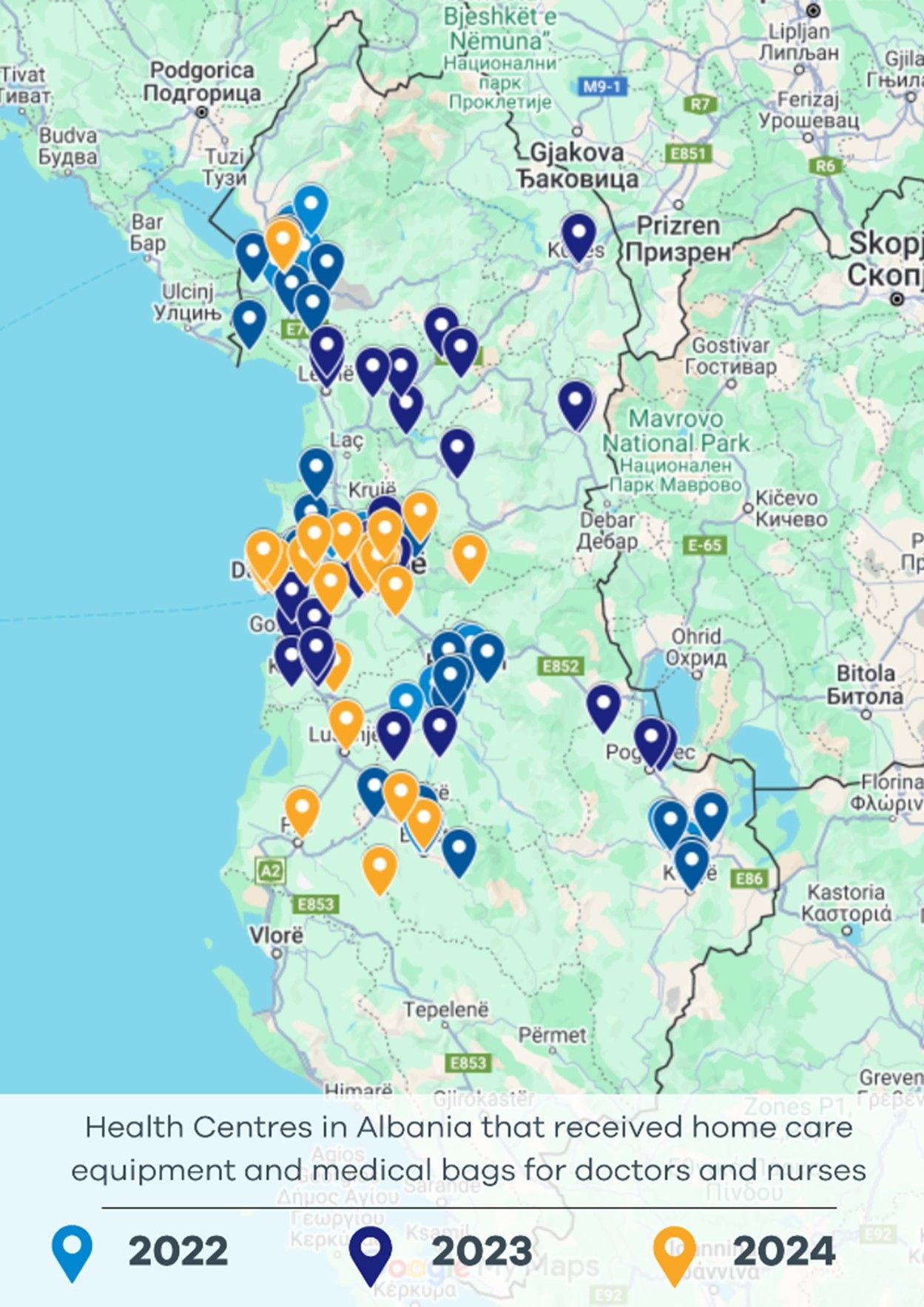
In response to this urgent need, the Health for All Project (HAP), in partnership with the Ministry of Health and Social Protection, introduced a new home care model in 2021 to support homebound patients with chronic disease or affected by multi-morbidity. A key element of this initiative was equipping health centres across the country with essential home care tools—a milestone in Albania’s healthcare system. For the first time, healthcare professionals had access to the necessary tools to deliver better care, significantly improving the quality of life for those in need.
“Lack of even the most basic equipment made caring for our patients really difficult. Imagine having to send a patient to a hospital just to measure his oxygen levels”, shared family doctor Fabiola Bali from the Rrashbull Health Centre. “We’ve had patients who were bedridden due to various illnesses or bone fractures, and we couldn’t even provide them with a wheelchair. They had to find one privately - if they could afford it. Thanks to the equipment provided by HAP the quality of care we can offer patients has significantly improved and we are truly thankful”.
Family nurse Blerina Pisha from the Klos Health Centre emphasised the critical role of home care equipment: “These tools play a vital role in providing home care. Without them, the service is incomplete. Their availability allows us to deliver better patient care, achieve treatment goals, and ease the financial burden on both patients and their families”.
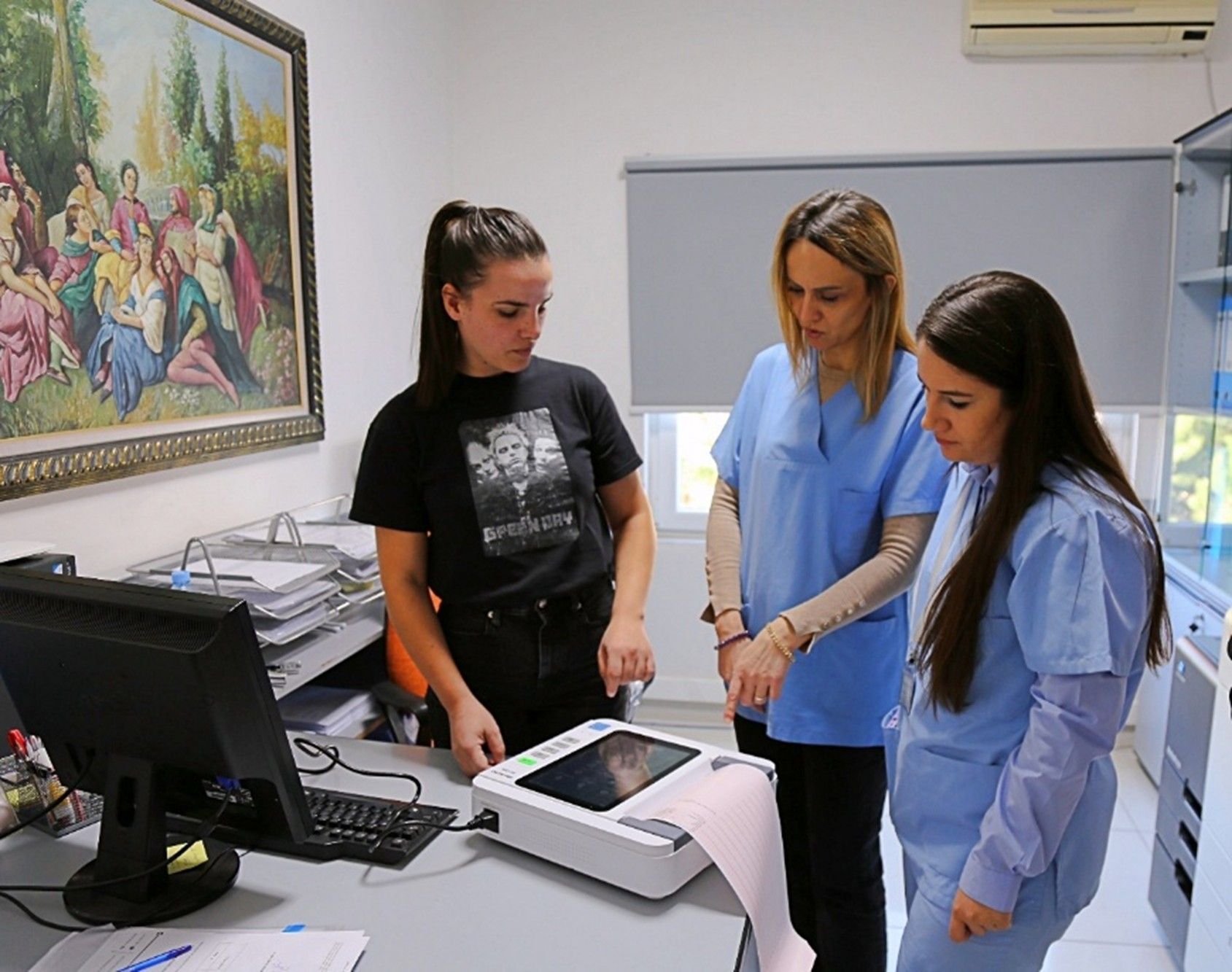
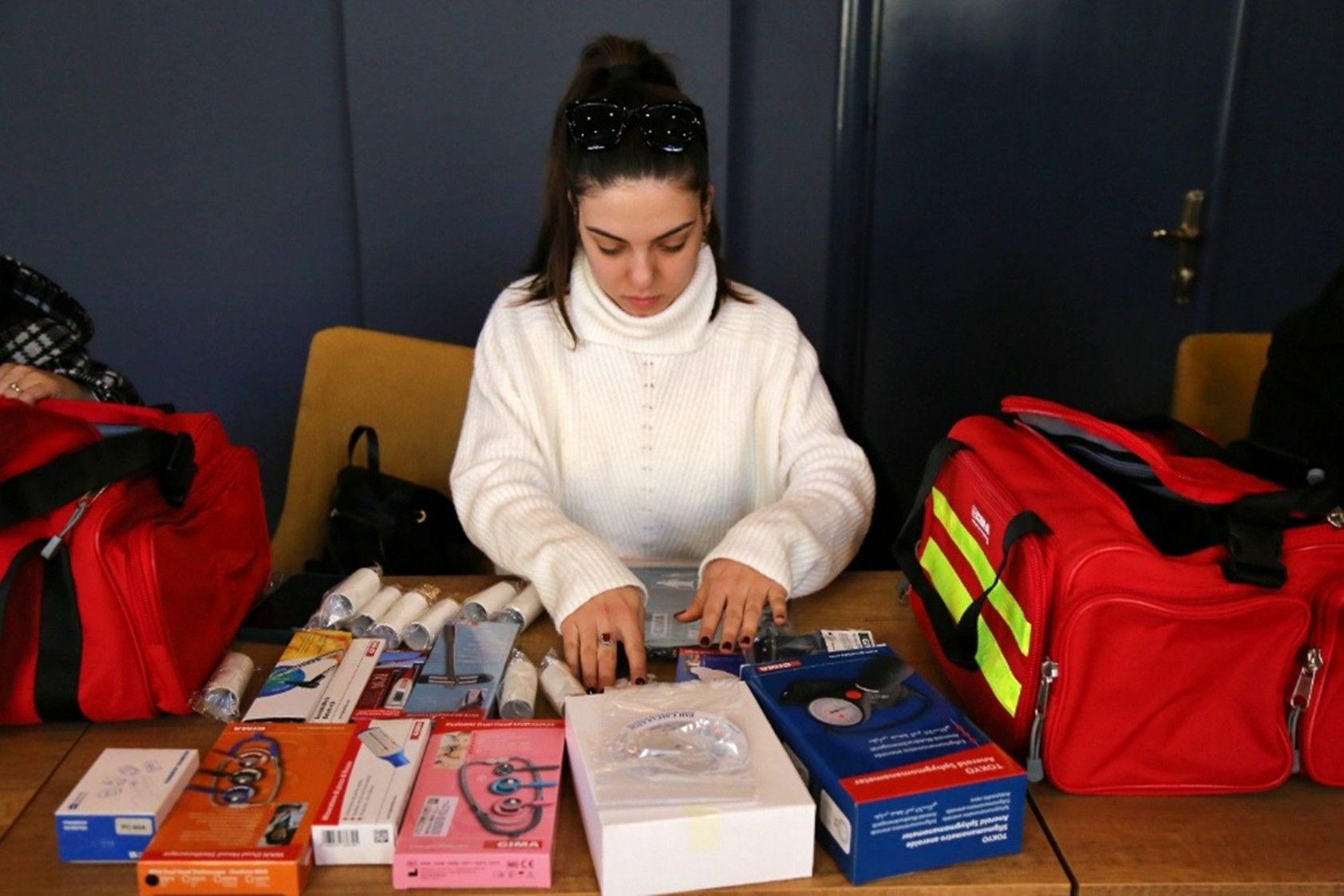
Since 2021, HAP has supplied 120 of Albania’s 356 health centres with critical home care equipment, including portable oxygen concentrators, portable ECG machines, wheelchairs, shower chairs, elbow crutches, anti-decubitus mattresses, frame walkers, microsurgery kits, nebulizers, catheters, and lymphedema leg/arm treatment pads, among others. To maximise their impact, most of this equipment is provided to patients for as long as needed, after which it is returned and reassigned to other individuals requiring care. This approach ensures that more patients benefit from these vital resources while maintaining accessibility for those in need. Additionally, doctors and nurses receive personal medical bags equipped with diagnostic tools, empowering them to deliver more efficient and high-quality care during home visits.
These items were carefully selected in collaboration with healthcare providers to ensure they address the most urgent patient needs and were distributed in coordination with local health authorities.
Home care coordinator, nurse Arta Zogu from the Dajç Health Centre compared working without proper equipment to “a soldier going to war without a weapon. No matter how skilled a nurse may be, without the right tools, the work remains incomplete and unprofessional. Previously, we had to tell patients to travel to the city for higher-quality care. Now, having the necessary medical equipment in our bags when visiting patients at home makes us feel more confident and professional in the care we provide”.
Based on feedback from healthcare professionals, the most requested equipment includes mobility aids such as shower wheelchairs, walker frames, and patient transfer slings, as well as medical devices typically used in clinical or hospital settings, such as ECG machines, oxygen concentrators, lymphedema therapy devices, and enema bag kits.
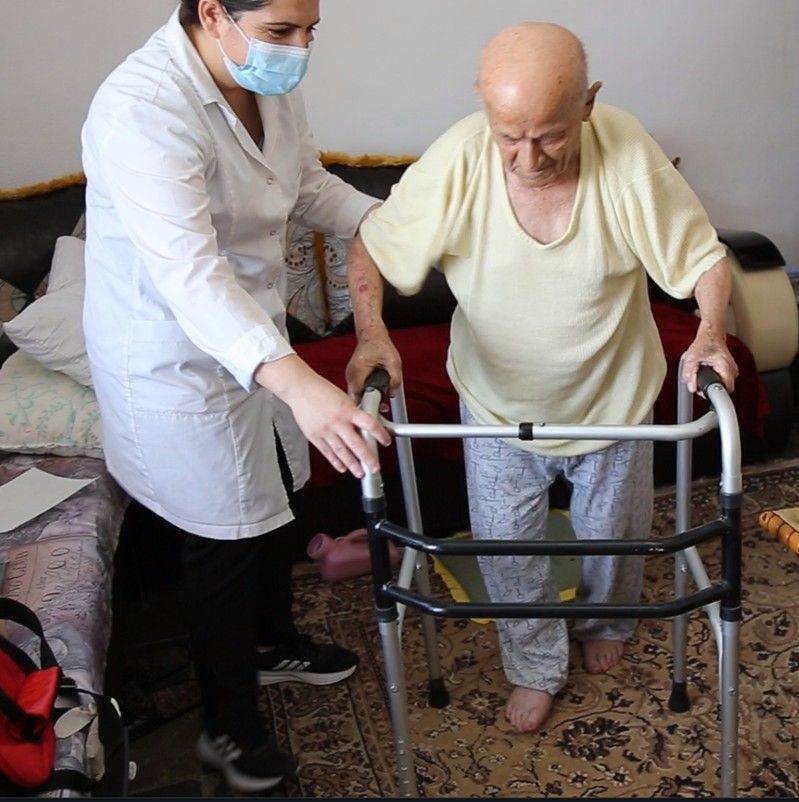
Home care nurse aiding patient mobility through the use of a walker frame.
On the receiving end of the service, for patients and caregivers, access to this equipment has been life-changing. “I am so happy to be finally able to go out onto the porch, breathe some fresh air and move around”, said with a sense of relief patient S.V. who received a wheelchair.
“There were times I would go three weeks without a proper shower as my wife obviously couldn’t manage my weight. Thanks to the shower chair I can finally have a shower normally. What is more, receiving an oxygen concentrator truly saved our lives – we used to rent one from the city, and it was a huge expense for us. We are immensely happy and grateful for the help”, shared patient R.S. who suffers from a lung tumour.
Family nurse Brunilda Tanushi from the Vau i Dejës Health Centre recalls taking care of a patient with pressure ulcers. “I followed every protocol to the letter, but the real breakthrough happened when we provided the patient with an anti-decubitus mattress. That made all the difference”.
A.H., the daughter of a bedridden patient, explained how the shower chair transformed their daily life: “Before, assisting my father—especially taking him to the toilet or shower—required two or three people. This chair has been a lifesaver.”
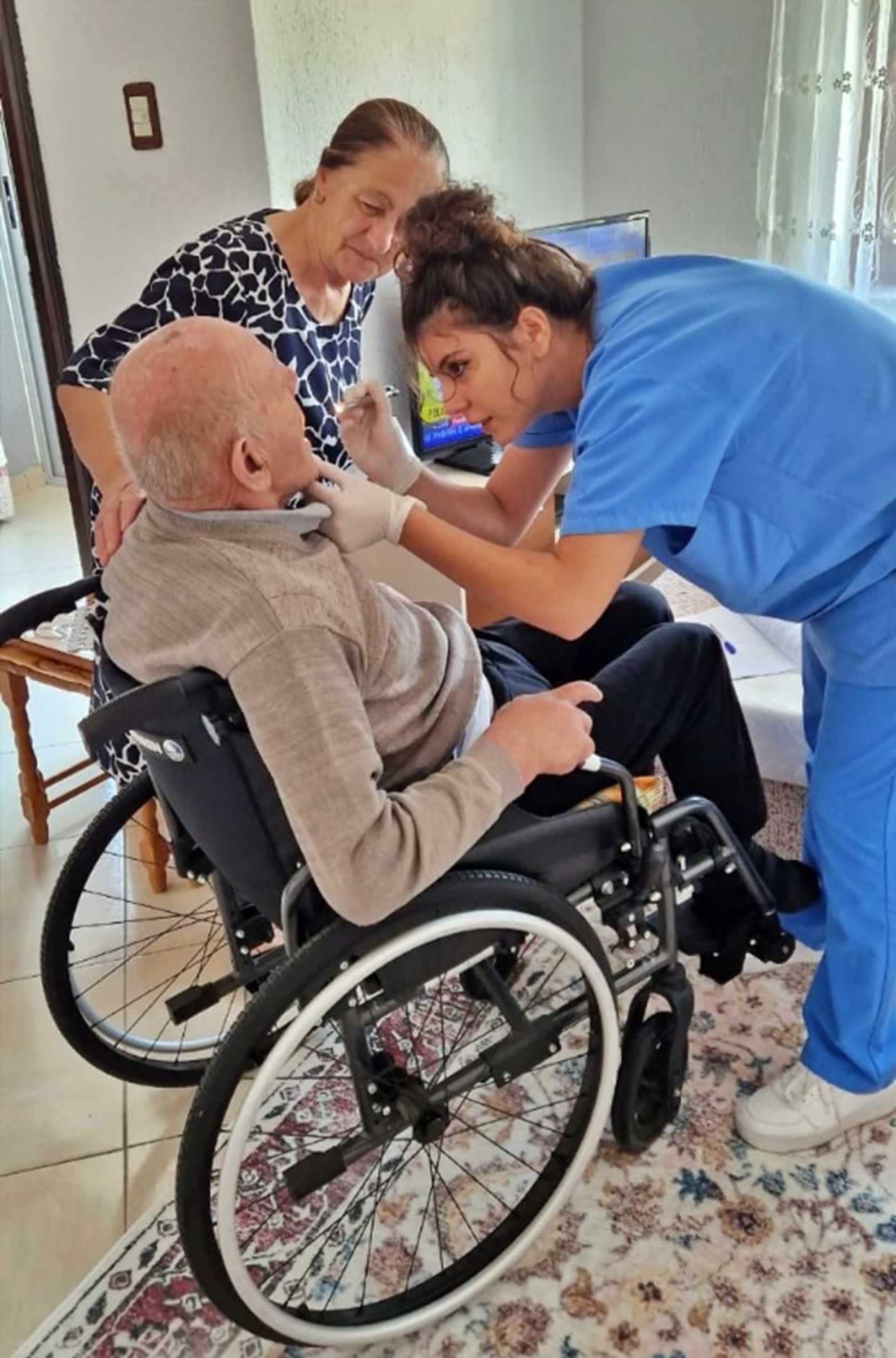
Home care nurse assisting a patient in a wheelchair.
Data from health centres show that home care visits have become more efficient and patient satisfaction has improved significantly since the introduction of the equipment. Policy-makers are now recognizing the importance of sustained investment in home care, and discussions about additional funding to ensure continued equipment supply, consumables and healthcare worker training are promising.