
Community Medical Assistance in the Republic of Moldova - an essential component in the strengthening of Community Care and Long Term Services
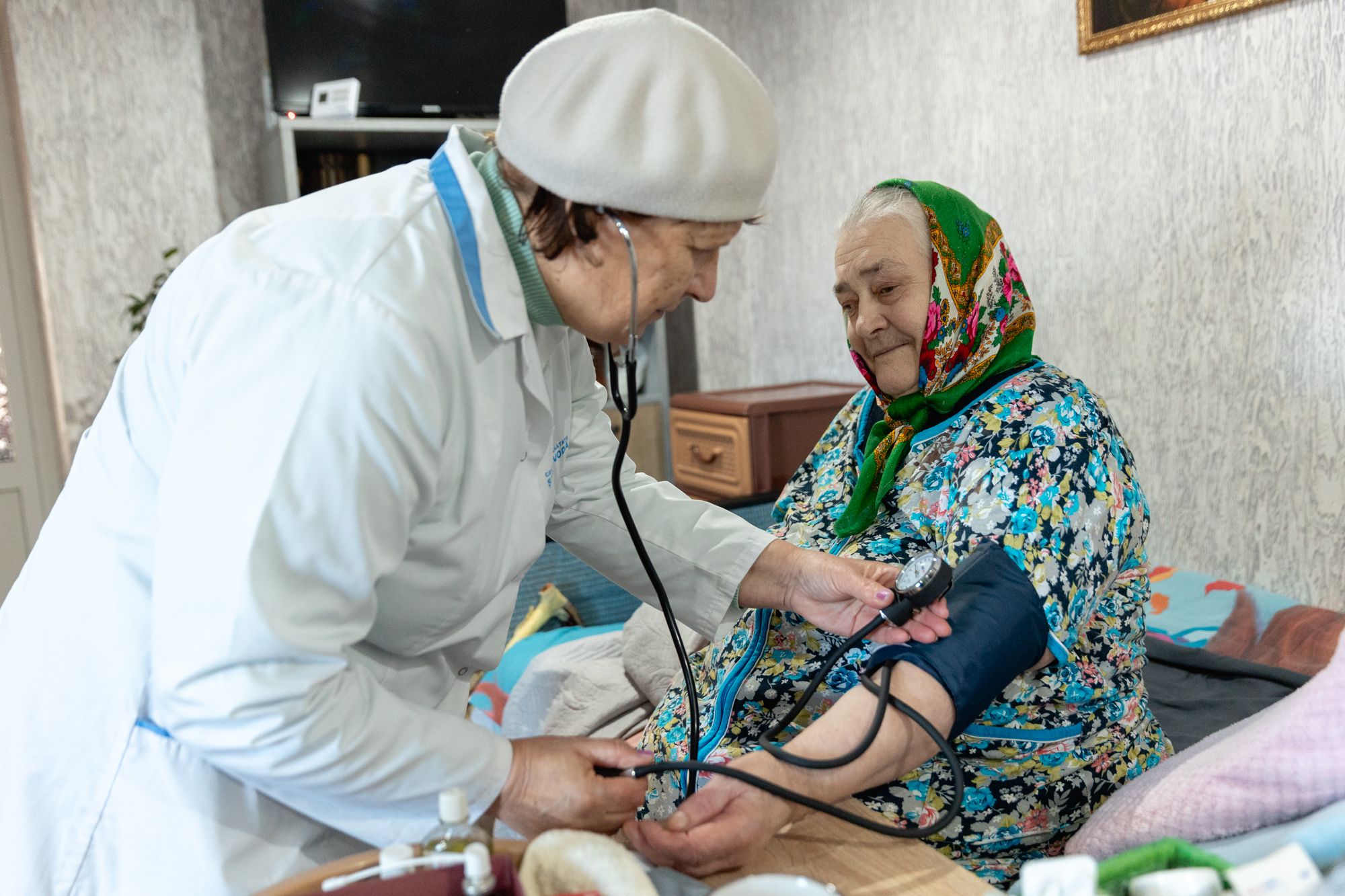
Community Medical Assistance (CMA) is a relatively new branch of nursing in the Republic of Moldova. Demographical changes caused by migration and ageing of population require community-based medical and social care services to become more integrated and person-centred, notably for elderly patients with multiple NCDs. Through the projects recent work with the Ministry of Health, understanding of the importance of CMA in PHC at community level is growing. The MoH had approved norms for organizing CMA back in 2014 but they had previously not been implemented.
Meanwhile, the number of CMAs reached 228 in 2019, and 306 in 2023. Additionally, MoH diversified modalities of enrolling CMAs allowing medical assistants of family doctors to cumulate the position, especially this being necessary in small communities were the number of population is limited and there is a lack of medical staff.
Key Steps in the Development of CMA:
An updated Occupational Profile and Qualification Standard for starting initial and continuous training of CMA were developed and are in the approval process. A module on CMA was elaborated and taken up in the training programs of the main academia institutions like State Medical University «Nicolae Testemitanu» and Excellence Center of Medicine and Pharmacy «Raisa Pacalo» (ECMPh).
To accelerate the growth of the necessary CMA workforce, and ensure they have both strong knowledge and practical skills, a network of trainers from academia and practitioners underwent a WHO approved training in Bucharest, Romania. Members of the network have subsequently spearheaded the process to develop educational packages for the initial training of CMA professionals, ensuring the continuity of CMA services at the national level.
To deepen understanding and coordination of CMA within the PHC teams the training has been extended to managers of institutions, family doctors and medical assistants. By 2024, this has reached PHC teams from 75 pilot communities, 35 districts and 2 municipalities, making a total of 1,603 persons. Since 2023, the training delivery was taken over by the Centre of Excellence of Medicine and Pharmacy (ECMPh) which meanwhile educated 23 CMAs.
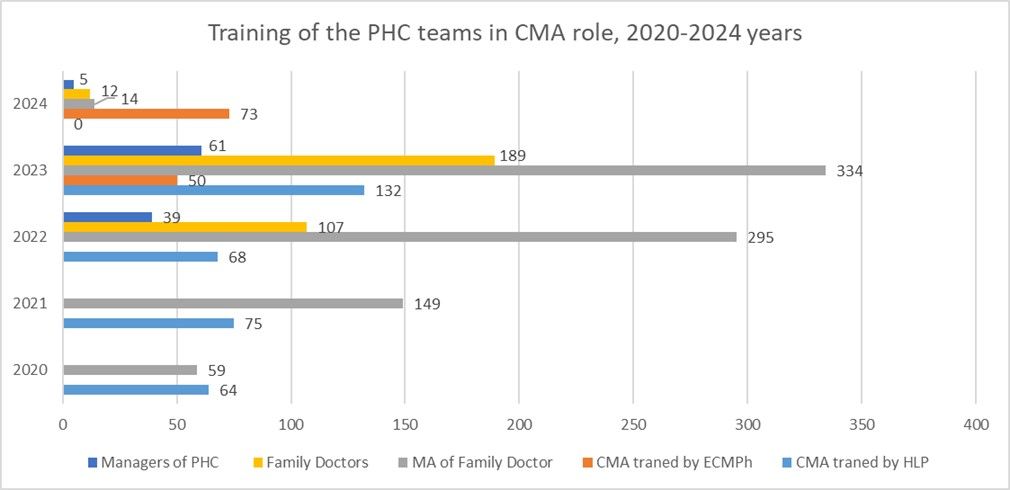
«Thanks to Swiss support, the "Raisa Pacalo» Center of Excellence in Medicine and Pharmacy could soon become the institution that not only enhances the skills and abilities of CMAs but also trains new generations of professionals in this field," says Mariana Negrean, Director of the ECMPh «Raisa Pacalo».
The Impact of Integrated Care and CMA:
The implementation of integrated assistance and CMA ensures access for the most vulnerable population groups. There are now several clear tools and procedures of CMAs for more preventive actions, assessment of individual and community needs, early identification or concerns and risk factors and better coordination of interventions for the complex cases with multimorbidity and vulnerability and work in partnership with other sectors and resources within the community.