Published on 5 August 2024
Communicable Diseases
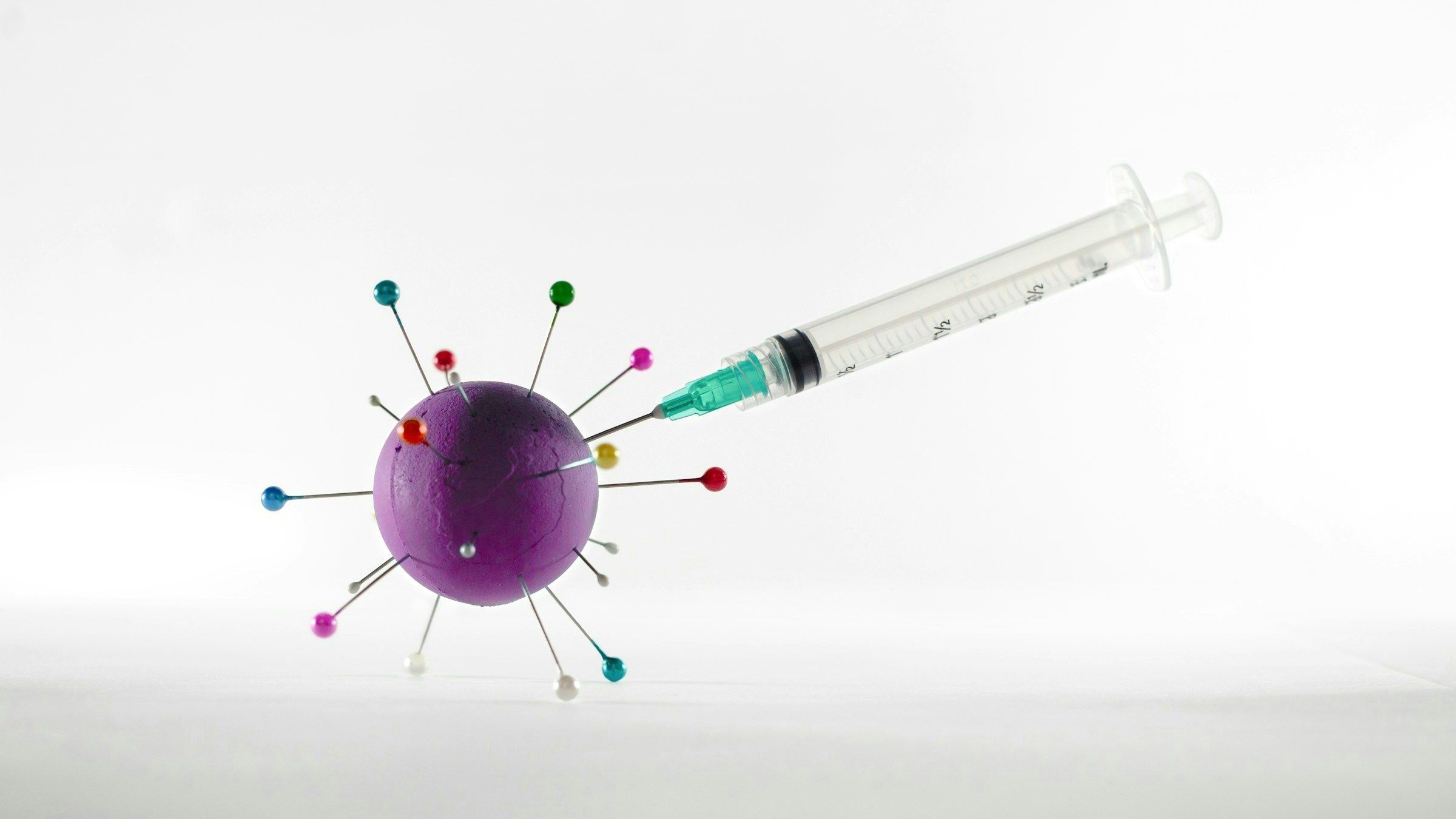
The COVID-19 pandemic, the Ebola outbreak, and the HIV epidemic, among others, highlighted the challenges of prevention, preparedness, and response to contagious diseases. Low-income countries are more exposed to emerging epidemics and more vulnerable to health shocks. Communicable diseases create a great deal of human suffering, hinder development, and make it more difficult for people to break out of the poverty trap. To combat communicable diseases, the SDC prioritises prevention, treatment, and the research and development of new medicines and diagnostic tools.
Video by the Swiss Malaria Group
The Global Fund - A Key Partner for Global Health
The Global Fund to Fight AIDS, Tuberculosis and Malaria is a key partner in global health, providing financing for disease programmes and health systems strengthening in countries most affected by the three diseases. Switzerland has supported the Global Fund since its establishment in 2002 and collaborates closely with the organisation to improve health outcomes, strengthen health systems and advance sustainable access to essential health services.
Recommended Readings
The Global Fund – Results Report 2025
After over two decades of remarkable progress, global health is once again in crisis. Sharp reductions in international funding are having a huge impact, including on the fight against the world’s deadliest infectious diseases – HIV, tuberculosis (TB) and malaria
PDF20.30 MB1 September 2025
World Aids Day Report 2023: Summary
This report shows how community-led interventions are central to achieving the end of AIDS and to sustaining the gains into the future. People living with or affected by HIV have driven progress in the HIV response - reaching people who have not been reached; connecting people with the services they need; pioneering innovations; holding providers, governments, international organizations and donors to account; and spearheading inspirational movements for health, dignity and human rights for all. They are the trusted voices.
PDF2.07 MB1 January 2023
UNAIDS Data 2023
The article presents data on HIV/AIDS over the past 23 years, disaggregated by different regions and key populations.
PDF12.54 MB1 January 2023
Global health sector strategies on, respectively, HIV, viral hepatitis and sexually transmitted infections for the period 2022-2030
The 2022–2030 global health sector strategies on, respectively, HIV, viral hepatitis and sexually transmitted infections guide the health sector in implementing strategically focused responses to achieve the goals of ending AIDS, viral hepatitis B and C and sexually transmitted infections by 2030
PDF4.09 MB1 January 2022
The Potential Impact of Country-Level Migration Networks on HIV Epidemics in Sub-Saharan Africa: The Case Of Botswana
Numerous studies of generalised HIV epidemics in sub-Saharan Africa have shown that geographical variation in prevalence is common. As a consequence, this variation is considered when designing epidemic control strategies, for example with geographical targeting strategies.
PDF3.78 MB1 December 2021
End Inequalities. End Aids. Global Aids Strategy 2021-2026
End Inequalities. End AIDS. Global AIDS Strategy 2021-2026 is a bold new approach to use an inequalities lens to close the gaps that are preventing progress towards ending AIDS. The Global AIDS Strategy aims to reduce these inequalities that drive the AIDS epidemic and prioritize people who are not yet accessing life-saving HIV services.
PDF2.07 MB1 January 2021
Multipurpose prevention technologies Technology Landscape and Potential for Low- And Middle-Income Countries
The objective of this report is to provide an overview of the current landscape of MPTs, products that simultaneously prevent HIV, other STIs, and/or unintended pregnancy, and assess their relevance and potential challenges for L/MICs. The report aims to support the timely introduction of these innovations and identify challenges, including in research and development (R&D) or related to market entry, which may hamper the adoption and impact of MPTs in L/MICs if not promptly addressed.
PDF1.73 MB1 January 2021
Global progress report on HIV, viral hepatitis and sexually transmitted infections 2021
The 2021 global progress report on HIV, viral hepatitis and sexually transmitted infections, is an opportunity to take stock of the progress achieved in addressing these diseases to date, the setbacks caused by the pandemic, and the lessons learned for the coming decade
PDF4.98 MB1 January 2021
My Right, My Health
The just rule of law is a critical social determinant of people’s health and well-being. The period from 2008 to 2018 saw fundamental shifts in the legal environment in Malawi for people living with, at risk of and affected by HIV. This casestudy examines the factors leading to change in Malawi, including the critical role played by civil society organizations, the inspiring advocacy of women living with HIV, the strategic dialogues among communities, parliamentarians and government representatives, and the technical assistance and high-level advocacy with the support of the UNAIDS Joint Programme.
PDF327.92 kB1 January 2019
Mobility and Stability
Since 2014, the Bolivarian republic of Venezuela has been the source of a major migratory movement that has spread across Latin America and the Caribbean. Migrants face intersecting vulnerabilities to HIV and barriers to accessing health care that require interagency, cross-border responses. Governments, civil society organizations and communities, supported by the un joint programme on HIV/Aids (UNAIDS) and other united nations agencies, are working within the country and across the region to address these vulnerabilities, realize migrants’ right to health and end the aids epidemic.
PDF238.19 kB1 January 2019
Building Resilience to Climate Breakdown to Prevent Ill Health
Eastern and southern Africa is coping with an upturn in severe weather events. The consequence of increasingly common climate disasters is often food insecurity, displacement and socioeconomic instability. Amid this humanitarian emergency, UNAIDS and its partners are working together to recognize and strengthen the resilience of affected communities as part of the AIDS response and ensure that hard-won progress is protected.
PDF153.62 kB1 January 2019
Bringing Justice to HIV
The discriminatory use of criminal law to target people living with HIV has resulted in grave human rights violations. It undermines access to services and risks jeopardizing our goal of ending AIDS as a public health threat by 2030.
PDF186.39 kB1 January 2019
Sexual and reproductive health and rights and HIV
Early and forced marriage, forced sterilization, criminalization of mother-to-child HIV transmission and forced abortion—as well as inequality, repressive gender roles and intimate partner violence—have been identified as deep-rooted factors that limit the control that women and girls have over their own sexuality, health and rights.
PDF190.83 kB1 January 2019
Elimination without violation: Supporting women living with HIV in putting human rights at the centre of validating the elimination of mother-to-child transmission of HIV
Cuba, with its highly developed health-care infrastructure and universal health coverage, had reduced the rate of HIV transmission from mother to child to about 2% and eliminated congenital syphilis by 2012, following a concerted effort with the Pan American Health Organization (PAHO) (6). Cuba requested validation of status of elimination in late 2013, before the WHO guidelines had been finalized, becoming a pioneer for the process as a result.
PDF157.95 kB1 January 2019
Demanding access to justice: Spearheading the establishment of the Coalition of Lawyers for Human Rights in Nigeria
Discrimination and violence against lesbian, gay, bisexual, transgender and intersex (LGBTI) people in Nigeria are far too common. Human rights violations against LGBTI people are fuelled by coercive and discriminatory legislation: same-sex sexual relations are criminalized in the country, and in some states in northern Nigeria where Shari’a law is applied, these acts are punishable by death
PDF123.30 kB1 January 2019
Mainstreaming HIV in Practice
The Swiss Agency for Development and Cooperation (SDC) has been committed for many years to contributing to the fight against the global AIDS epidemic in collaboration with its partner countries and international organisations. Mainstreaming – by addressing HIV and AIDS related issues at the policy and coordination level, at the workplace as well as in SDC projects and programmes – is thereby one of the major strategies they pursue.
PDF9.84 MB1 January 2010
Toward an equitable access to SARS-CoV-2 vaccines for all Part3
PDF1.11 MB29 July 2024
Toward an equitable access to SARS-CoV-2 vaccines for all Part2
PDF3.01 MB29 July 2024
Toward an equitable access to SARS-CoV-2 vaccines for all
PDF1.17 MB29 July 2024
Private Sector Engagement in the COVID‑19 response: Experiences and Lessons from the Democratic Republic of Congo,Nigeria, Senegal and Uganda
Private entities play a major role in health globally. However, their contribution has not been fully optimized to strengthen delivery of public health services. The COVID-19 pandemic has overwhelmed health systems and precipitated coalitions between public and private sectors to address critical gaps in the response. We conducted a study to document the public and private sector partnerships and engagements to inform current and future responses to public health emergencies.
PDF864.46 kB15 July 2022
Use of SARS-Cov-2 Antigen-Detection Rapid Diagnostic Tests for COVID-19 Self-Testing
Timely and accurate diagnostic testing for SARS-CoV-2, the virus that causes COVID-19, is an essential part of a comprehensive COVID-19 response strategy. Diagnostic testing for SARS-CoV-2 supports both individual-level case finding and community-level actions to inform the overall public health response.
PDF496.14 kB9 March 2022
Inequality Kills: The unparalleled action needed to combat unprecedented inequality in the wake of COVID-19
Here’s a hard truth that the pandemic brought home to us. Unequal access to incomes and opportunities does more than create unjust, unhealthy, and unhappy societies: it actually kills people.
PDF2.06 MB1 January 2022
Covid-19 Research and Innovation Achievements
In March 2020, within a few weeks of the World Health Organization (WHO) declaring COVID-19 to be a public health emergency of international concern (PHEIC), a coordinated global research roadmap was published by WHO.
PDF4.82 MB1 April 2021
Hindsight is 2020? Lessons in Global Health Governance One Year into the Pandemic
Fourteen months into the SARS-CoV-2 pandemic, we identify key lessons in the global and national responses to the pandemic. The World Health Organization has played a pivotal technical, normative and coordinating role, but has been constrained by its lack of authority over sovereign member states.
PDF1.08 MB1 March 2021
Covid-19 & Community Resilience
This report presents the findings of a survey conducted in 25 countries in the final quarter of 2020 to assess the impact of Covid-19 on food security, WASH, health, education, income, indebtedness and the psychosocial conditions of households.
PDF2.88 MB1 January 2021
COVID-19: Make it the Last Pandemic
The world is still in the midst of a pandemic that has spread wider and faster than any in human history. The social and economic crisis precipitated by COVID-19 is affecting families, communities and nations across the globe.
PDF5.27 MB1 January 2021
The Global Fund – Results Report 2025
After over two decades of remarkable progress, global health is once again in crisis. Sharp reductions in international funding are having a huge impact, including on the fight against the world’s deadliest infectious diseases – HIV, tuberculosis (TB) and malaria
PDF20.30 MB1 September 2025
World Malaria Report 2023
The World malaria report 2023 presents progress against several important health and development goals in global efforts to reduce the burden of malaria overall and eliminate the disease where possible. These goals are outlined in the Sustainable Development Goals (SDGs) framework.
PDF10.24 MB1 January 2023
The Comprehensive Multisectoral Action Framework: Malaria and Sustainable Development
Malaria impedes progress on sustainable development. Although it is entirely preventable and treatable, malaria continues to devastate families and communities around the world. More than 241 million malaria cases occurred worldwide in 2020 – and that is surely an undercount given the COVID-19-related disruptions. That is the same number of cases as 20 years ago. More than 625,000 people die from malaria every year.
PDF7.73 MB9 January 2022
Vector control interventions designed for malaria transmission control in complex emergencies and in response to natural disasters
When complex emergencies or natural disasters occur in tropical and sub-tropical areas, malaria is often a significant contributor to the consequent mortality. Alternatives to "traditional" interventions are often required to ensure that at-risk populations in complex emergency and natural disaster settings are optimally protected.
PDF177.22 kB1 January 2021
Insecticide-treated nets for malaria transmission control in areas with insecticide-resistant mosquito populations
ITNs are one of two malaria vector control interventions recommended for largescale deployment by WHO, the other being indoor residual spraying.
PDF193.31 kB1 January 2021
WHO Guidelines for Malaria
The consolidated WHO Guidelines for malaria present all of the current WHO recommendations for malaria.
PDF2.67 MB1 January 2021
Norms, Standards and Processes Underpinning WHO Vector Control Policy Development
In 2018, the World Health Organization (WHO) reviewed its processes for developing and disseminating policy guidance, spearheaded by a detailed analysis conducted within the Global Malaria Programme (GMP). The review identified areas for improvement, one of which is the better communication of the norms, standards and processes underpinning policy recommendations.
PDF917.37 kB1 January 2020
Global report on neglected tropical diseases
The WHO manages a diverse portfolio of 20 diseases and disease groups whose public health burden is often overlooked – neglected – by relevant authorities or decision-making bodies. Conservative estimates indicate that these NTDs account for some 14.5 million disability-adjusted life years (DALYs), with significant variation among tropical and nontropical countries and developed and developing areas
PDF6.77 MB1 January 2023
One Health: Approach for action against neglected tropical diseases 2021–2030
This companion document aims to support a range of stakeholders – including countries endemic for NTDs, international organizations and non-State actors – to achieve the road map targets through a transdisciplinary, cross-cutting One Health approach. Specifically, it provides guidance on the One Health actions needed by major stakeholders and how to support a paradigm shift towards One Health in national NTD programmes.
PDF7.22 MB1 January 2022
A road map for neglected tropical diseases 2021–2030
The road map for neglected tropical diseases 2021–2030 is WHO’s second blueprint for preventing, controlling and, where feasible, eliminating and eradicating neglected tropical diseases. It follows the first road map, Accelerating work to overcome the global impact of neglected tropical diseases, issued in 2012 (1), which set out global targets and milestones to 2020 for the 17 NTDs that then comprised WHO’s NTD portfolio.
PDF15.22 MB1 January 2020