
ComBaCaL: How Community Health Workers are Changing the Face of Chronic Care in Lesotho
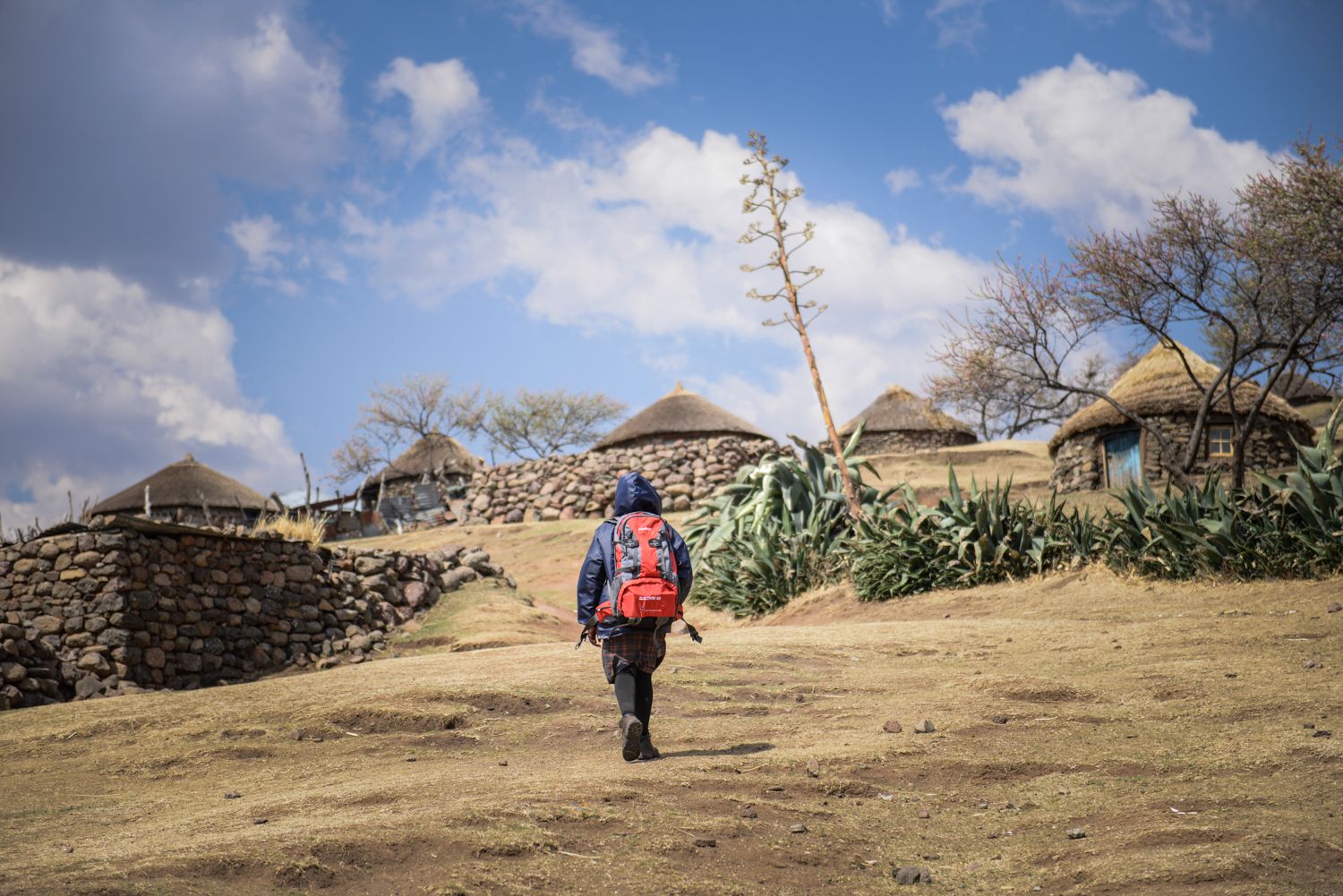
On a chilly morning in the remote village of Kholokoe, Lesotho, 27-year-old Likabiso Nkune heads out to begin her day – not to a clinic, but to a patient’s home. As a trained Community Health Worker (CHW), her role is to screen, diagnose, and monitor people living with hypertension and diabetes, using a tablet-based eHealth app and portable diagnostic tools. Her presence brings life-saving care to places where doctors and nurses are difficult to reach.
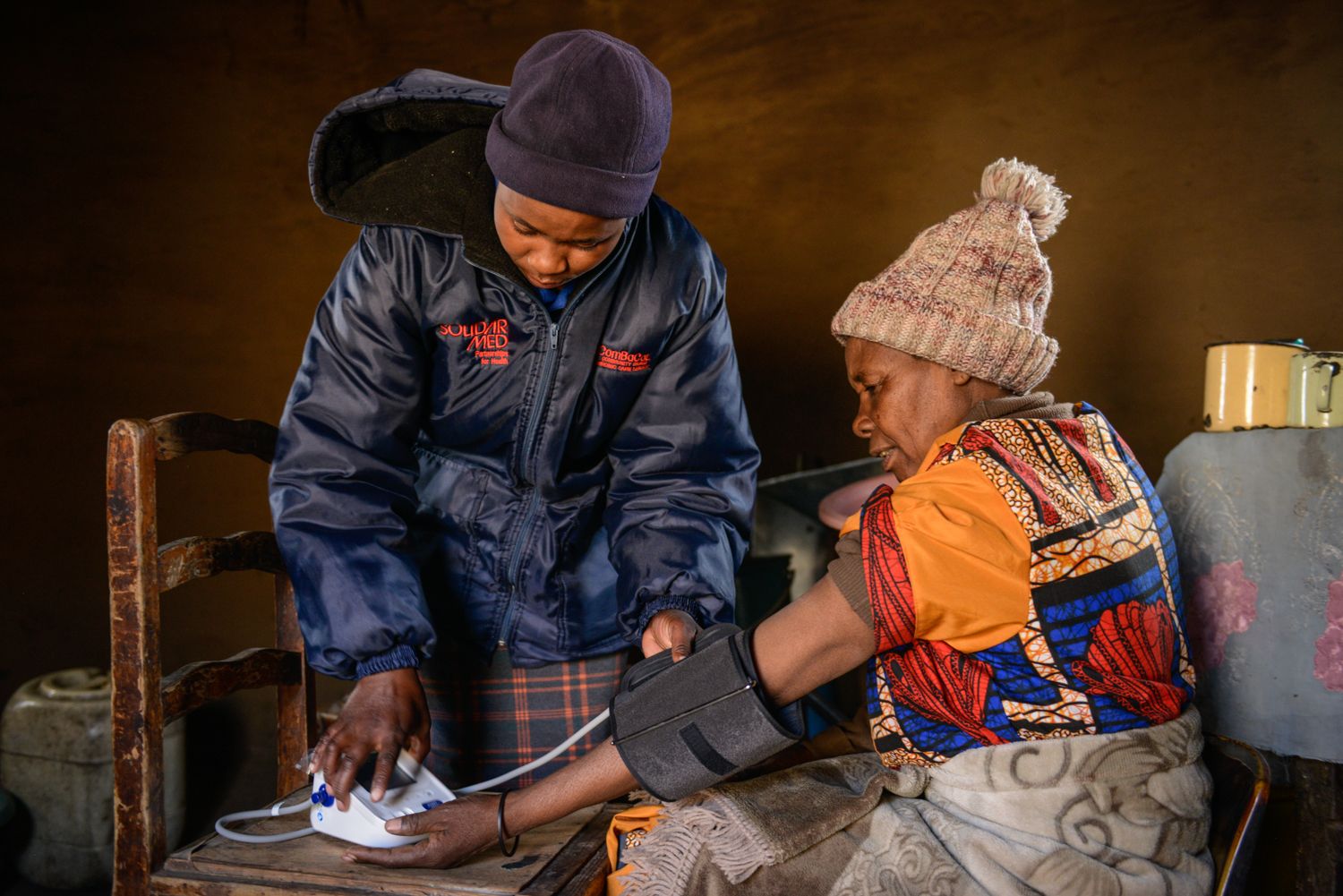
“Many of my patients were not aware that they were sick,” she explains, “but now they’ve been diagnosed. When I test a patient in their home, I’m able to bring them the right medication, without them having to travel on the steep terrains to the nearest health centre.”
Likabiso is one of 113 CHWs trained through ComBaCaL, a Swiss-Lesotho collaboration co-led by SolidarMed, the Ministry of Health of Lesotho, community representatives, the University Hospital Basel, and the National University of Lesotho. The project combines implementation, capacity strengthening, research, digital innovation and national- and international policy dialogue to tackle non-communicable diseases (NCDs) – now the leading causes of premature death worldwide and across most African countries.
The Innovation: Chronic Care at the Doorstep
Between 2021 and 2024, CHWs registered over 15,000 adults across 113 villages in Butha-Buthe and Mokhotlong districts. By December 2024, over 98% of eligible adults had been screened for hypertension and diabetes in the communities – an impressive level of screening coverage only made possible by the innovative CHW-led approach. The project went a step further. For the first time, CHWs were empowered to independently prescribe first-line treatment to people with hypertension or diabetes. This groundbreaking approach proved not only feasible and safe, but also effective in improving care for people affected by hypertension or diabetes in rural Africa. The ComBaCaL project is the first to generate robust and high-quality evidence of this kind.
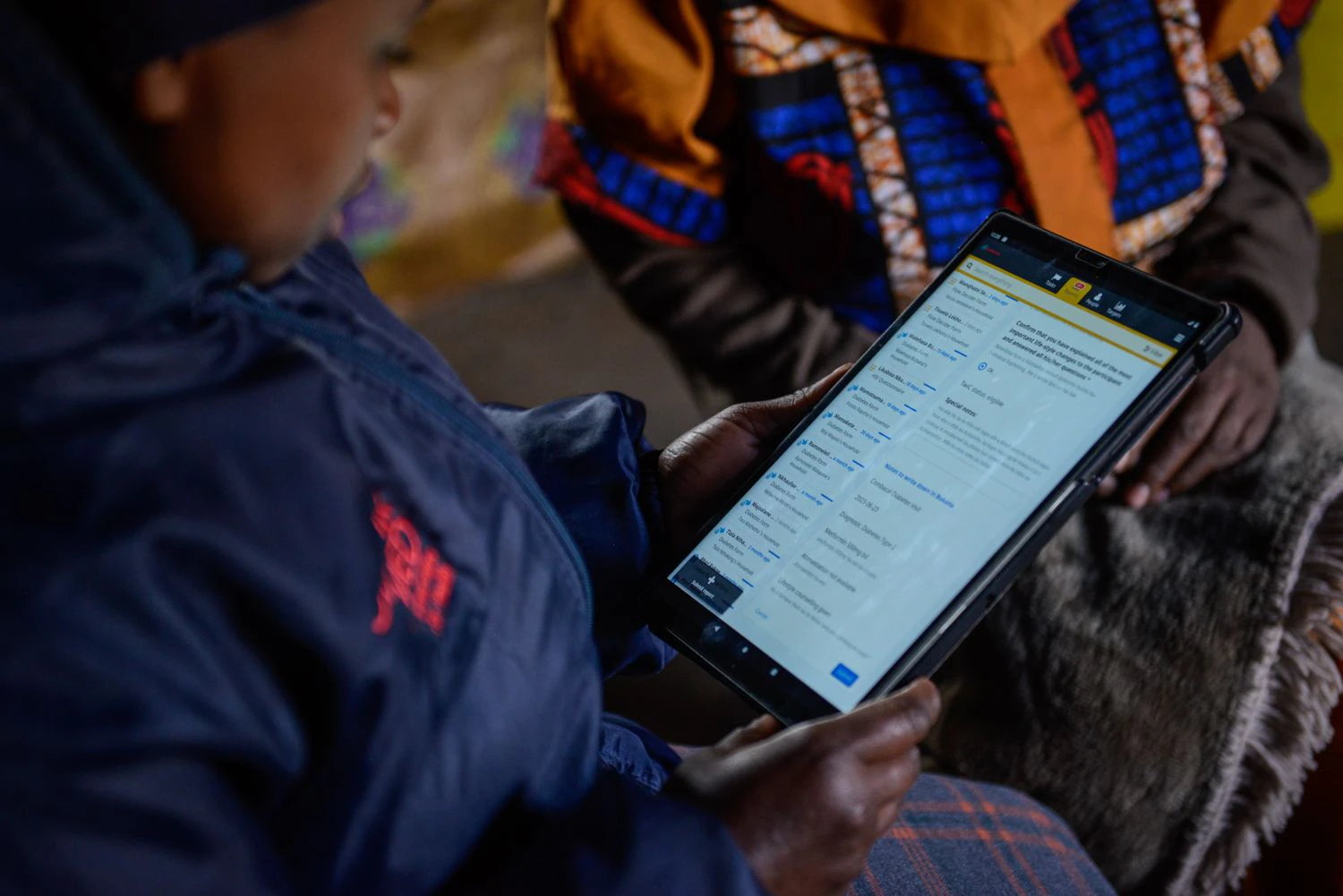
“The eHealth application helps a lot,” says Likabiso. “The patients sign consent forms on the app. I test their blood sugar and blood pressure and then follow up – sometimes even on Sundays if needed. The app guides me and syncs my data, so I don’t have to deliver paperwork by hand.”
This app, based on the open-source Community Health Toolkit (CHT), is used to monitor patients, track medication refills, and guide care decisions. Importantly, no major safety incidents were reported, reinforcing the reliability of this CHW-led model.
Strengthening the Health System: Nurses, Health Facilities, and Data Integration
ComBaCaL is more than just a community intervention – it represents a comprehensive health system strengthening initiative. Across the 23 project-supported health facilities, nurses and data managers have been trained to deliver high quality care for diabetes and hypertension. Diagnosis and treatment algorithms have been improved, and cardiovascular registries introduced by ComBaCaL are now fully integrated into Lesotho’s national digital health system (DHIS2), enabling improved chronic disease monitoring.
Dr. ‘Mamakhala Chitja, an NCD Technical Advisor for the programme, explains: “We’re supporting all the hospitals and health centres to improve their management of NCDs. We train nurses to know when to screen, when to treat, and when to refer. We also support them with medical equipment to diagnose patients.”
Empowering the Next Generation of Basotho Researchers
The project has also strengthened local academic institutions. Through ComBaCaL, undergraduate students from the Faculty of Health Sciences at National University of Lesotho completed their clinical research placements. At the same time, young bright Basotho scholars are pursuing postgraduate degrees in Switzerland.
“This is a great opportunity for someone like me who comes from a country with very few resources,” says Moshao Makhele, a PhD student in Clinical Research at the University of Basel. “I’m gaining skills that I’ll bring back to improve my country’s health system.”
Microenterprise as a Pathway to Financial Independence for Village Health Workers
Recognising that sustainability also relies on economic empowerment, ComBaCaL equipped CHWs with training in micro-entrepreneurship. Given their modest stipends, supporting CHWs’ livelihoods is essential to strengthening their motivation – an objective that led to the introduction of the microenterprise initiative. By the end of 2024, 44 CHWs had established small businesses – ranging from grocery shops and dairy cow business to offering M-Pesa mobile money services – meeting essential community needs while generating supplementary income.
“We anticipate that more CHWs will begin repaying their loans,” says the Microenterprise Assistant. “The businesses generate income without compromising their clinical work.”
From Implementation to Policy: Scale-Up for Impact
ComBaCaL’s success has already influenced national policy. The Ministry of Health’s new Community-Based Health Services Strategy (2024/25-2029/30) reflects many of the project’s core components, including expanded roles for CHWs in NCD care. The national Standard Treatment Guidelines for NCDs have also been revised with ComBaCaL’s support.
“We’ve seen that CHWs can do their job,” says Madavida Mphunyane, NCD Programme Manager at the MoH. “Thanks to ComBaCaL, awareness around NCDs is growing. This project is needed all over Lesotho.”
What’s Next: Integration and Scaling Pathways
In 2025, ComBaCaL entered its final implementation year with a focus on thematic expansion into SRH and HIV care. A formative assessment in 2024 revealed high acceptability of CHW-led services for HIV testing, PrEP, contraception, and cervical cancer screening – particularly among adolescent girls and young women.
The evidence base is strong, the digital tools are mature, and the model is ready to be replicated – geographically and thematically.
“At the end of the day,” says Mphunyane, “we need the results from ComBaCaL to help our work in other districts. NCDs are dangerous illnesses, and this project is Godsent.”
Conclusion: A Model for Health Equity
CombaCaL showcases that with training, trust, and technology, CHWs can deliver high-quality chronic disease care in some of the most remote parts of the world. The project is not only changing the face of chronic care – it is reshaping national strategies, empowering rural communities, and offering a scalable path forward for health systems across Africa.